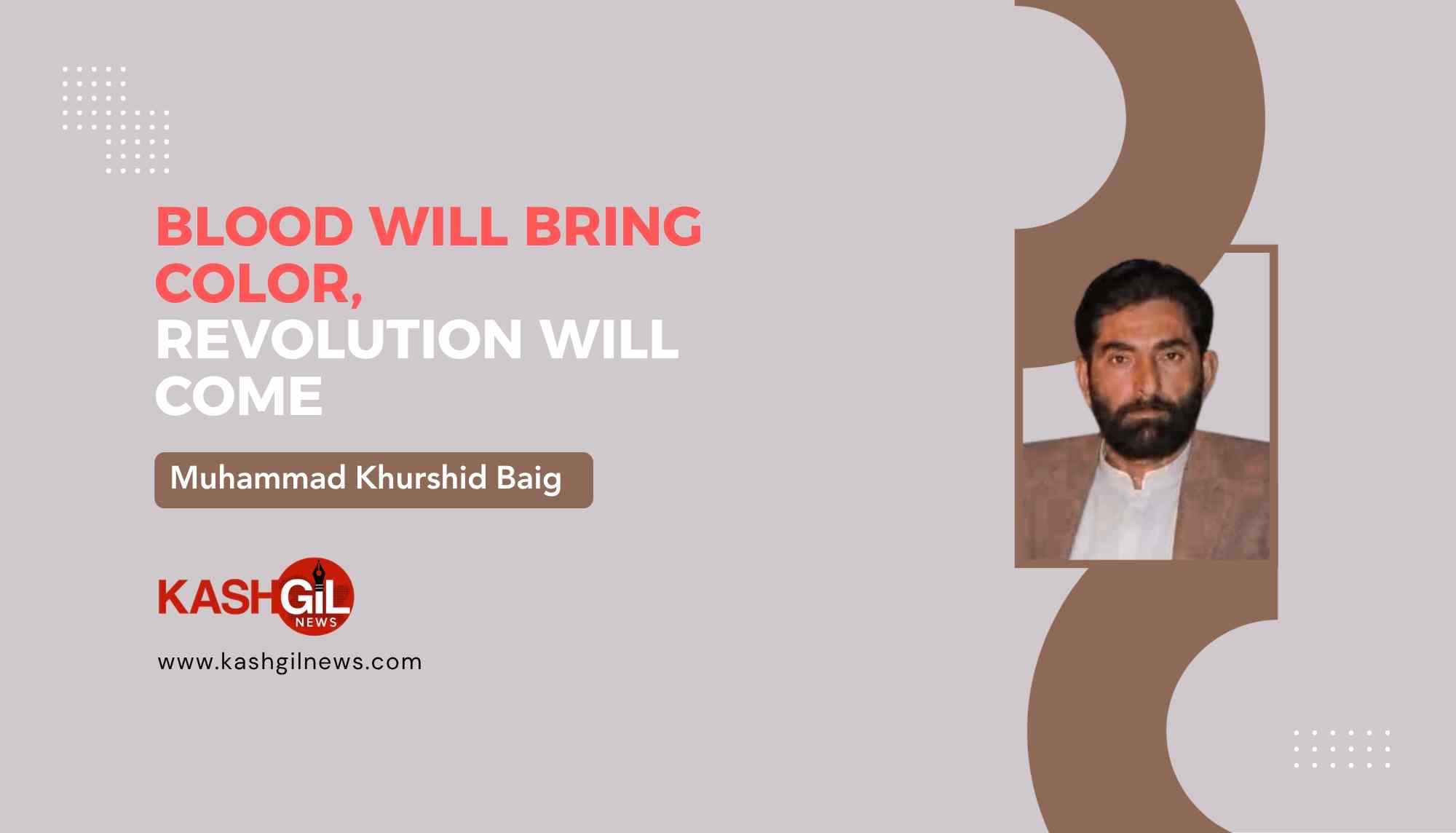
by: Muhammad Khursheed Baig
History does not remain silent where the land is watered with blood.” The valleys of Rawalakot once echoed with the laughter of children, spring danced on the green fields, the fragrance of freedom wafted from the mountains. But today, there are blood stains on these same fields, there is a sound of sobs and there is such pain in the eyes of mothers that it is not easy to describe in words.
The green fields of my city have been turned red with the blood of unarmed citizens, the people of the Pakistan-administered state of Jammu and Kashmir have created an eternal story of sacrifices by shedding blood for their demands, they are raising their voice for basic public rights but this voice has been answered with bullets.
This question is not just of a region but of the entire humanity that why Pakistani forces are firing bullets at those demanding basic rights. ? What kind of system is this where asking questions becomes a crime? Difference of opinion is considered rebellion? And the demands of the people are answered with force instead of negotiations. ?
Faiz Ahmed Faiz had probably said for such moments, “The one who kills someone with such a brutality I am gone, that glory remains intact, this life is to be lived, this life is not a matter of concern.”
From Bhimber to Taubat, a single voice is heard, “Blood will bring color, revolution will come.” This is not just a slogan, but the voice of the hearts of those who believe that sacrifices never go in vain. History is a witness that the age of oppression has always been short, while the voice of truth has become more powerful with time, but one question still hangs in the air.
Who will account for this blood?
Who will repay the debt of the tears of those mothers whose sons have not returned? Who will answer those children who kept waiting for their fathers? Who will be responsible for the silence of those homes where laughter once resounded?
Allama Iqbal had said, “Burn every ear of wheat in the field from which the farmer does not get his livelihood.”
When the doors of justice are closed, questions arise, and when questions are not answered, history itself begins to bear witness. Temporary silence can be imposed by force, but the voices that rise in the hearts cannot be silenced forever. If the demands of the people are truly related to constitutional and fundamental rights, then their solution is not force, but dialogue, law and justice. The wheel of time does not always remain the same. Powers change, governments change, but the blood written on the pages of history never dries.
Finally, these poems by Ahmed Faraz knock on the heart: “If you have heard, then words will blossom. If this is the case, then let’s talk and see.”
And if the doors of dialogue are closed, then not only silence speaks, but history speaks, conscience speaks, and the blood of martyrs speaks. Every drop of blood is a question and every question awaits justice. With my Lord of the worlds, there is no time, no darkness. He will definitely do justice, in whom I have complete faith.
٭٭٭
Share this content: