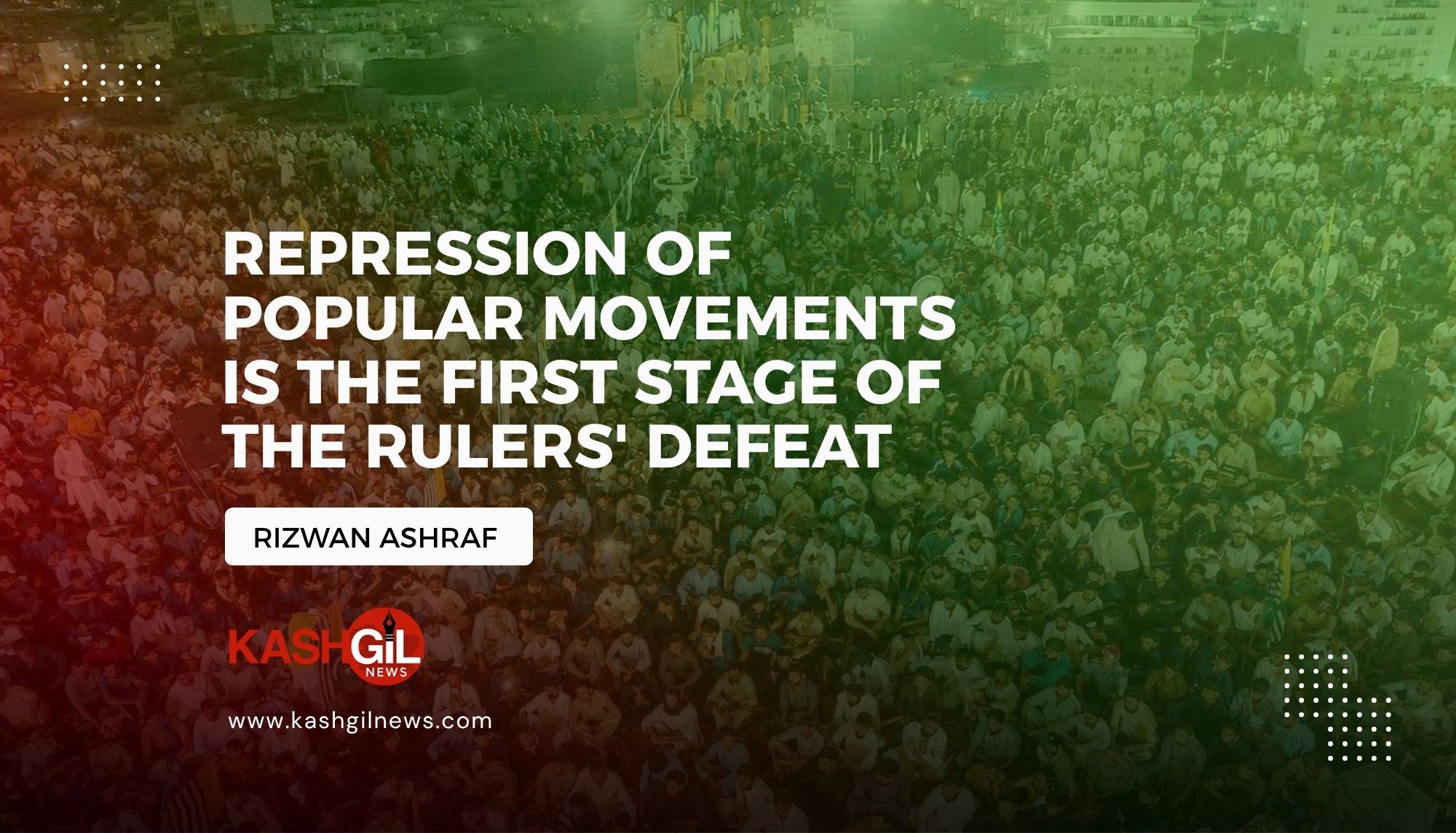
By: Rizwan Ashraf
The Anti-Apartheid Movement in South Africa stands as one of the world’s largest and most successful popular movements; it persisted for 46 years before ultimately achieving victory. Apartheid was an official policy implemented after the National Party—dominated by Afrikaners—came to power in 1948. Under this system, the country’s Black majority was deprived of fundamental human, political, and economic rights.
Black citizens were forced to use separate residential areas, educational institutions, hospitals, and transport systems. They were even stripped of the right to vote.
Among the apartheid laws was the notorious “Pass Laws” system, which mandated that Black citizens carry an identification booklet at all times; they were prohibited from entering “white areas” without explicit authorization.
Those who rose against this system faced brutality, violence, and arrests at the hands of the police and the military—many even sacrificed their lives. Yet, public consciousness had reached a point where it was no longer possible to accept oppression as justice or peace. People stood up against this inhumane system, undeterred by the prospect of violence, legal prosecution, or even death. The ruling authorities employed every tactic at their disposal—including the use of force and the banning of organizations that campaigned for the restoration of public rights—but they ultimately failed to block the path of truth and justice. Nelson Mandela was sentenced to life imprisonment for this very “crime” and spent twenty-seven years behind bars. Yet, the ruling powers could not withstand the collective consciousness and unity of the people; ultimately, the oppressive system collapsed, and Nelson Mandela became South Africa’s first Black president.
The State of Jammu and Kashmir—comprising regions such as Jammu, Gilgit, Baltistan, Ladakh, and Kashmir—was partitioned following the tribal incursions of 1947 and has since remained trapped in a cycle of further fragmentation. Despite the immense sacrifices made over four generations, India has—with the tacit acquiescence of Pakistan’s power circles—incorporated its occupied territories into its own “Union Territories.” Meanwhile, Gilgit-Baltistan remains under Pakistani control. As for the 13,000-square-mile territory known as “Pakistan-administered Kashmir” (or Azad Kashmir), a small group of individuals—behind closed doors—drafted an “interim constitution,” designating the area as a “base camp” for the struggle to liberate the entire state and unite it with Pakistan. In reality, however, it has merely become a staging ground for those seeking power through sycophancy toward Pakistan’s rulers—a game that continues to play out with full intensity to this day.
This region has been denied basic human rights. Nominally, a Legislative Assembly was established in this small territory, populated by an “army” of 53 assembly members—individuals whose primary pursuits were corruption, self-indulgence, and the deliberate marginalization of the local population. As public awareness grew, the people began to cry out for their fundamental human needs; yet, because the ruling class was intent on keeping the populace backward while living lives of luxury, they remained effectively indifferent to the plight of the people. Under the leadership of the Jammu and Kashmir Joint Awami Action Committee, the public began pressing for the restoration of their fundamental human rights—demands that the ruling authorities were eventually compelled to accept, however reluctantly. Yet, even the demands agreed upon last year remain unimplemented to this day.
Twelve seats were allocated in this so-called Legislative Assembly—ostensibly for “refugees from Jammu and Kashmir”—though it remains unclear who authorized this or upon whose advice it was done. In practice, this amounts to a declaration of the partition of the State. Furthermore, it has provided the ruling classes of Pakistan with a new instrument of political and administrative control in Azad Kashmir—a tool they wield at will to topple or install governments whenever they choose. Notably, there is absolutely no representation for regions such as Gilgit, Baltistan, or Ladakh; consequently, the Azad Kashmir Assembly cannot, even in the loosest sense, be considered a representative body for the entire State of Jammu and Kashmir. Moreover, under the Interim Constitution of Azad Kashmir, this Legislative Assembly has no connection whatsoever to the broader issue of the State of Jammu and Kashmir. Its actual purpose is merely to manage the territory stretching from Bhimber to Taobut—meaning the so-called government of “Azad Kashmir” functions effectively as nothing more than a municipal corporation.
In response to the demands put forward by the Jammu and Kashmir Joint Awami Action Committee—specifically calling for the abolition of these seats and the privileges enjoyed by the elite—a deafening campaign of propaganda has been unleashed. Some claim these seats are a “sacred mission” for the freedom movement, while others offer various other justifications. Yet, those making all this noise refuse to engage in any rational reflection: the truth is that not only are these twelve seats irrelevant, but the entire issue of the State of Jammu and Kashmir lies completely outside the jurisdiction of this Assembly. It is being claimed that the Action Committee lacks a mandate; but tell me, who grants a mandate? If the mandate comes from the people, and the people stand with the Action Committee rather than the assembly members, then with whom does the people’s mandate truly lie?
The assembly members and their associates have reduced their role to nothing more than showing indifference toward the rights of the public and making desperate attempts to turn the people against the Action Committee. The political parties present here function merely as business enterprises—essentially franchises for Pakistan’s political dynasties. These “business entities” have already issued directives to their workers to steer clear of the movement for public rights. Now, as politically conscious activists have refused to accept the status of slaves to these business entities, the majority of political workers from every party have aligned themselves with the Public Action Committee. The public remains deprived of basic human necessities; they lack access to healthcare, education, and employment opportunities.
Hospitals here serve merely as referral points, and due to the incompetence, hedonism, and ignorance of the ruling elite, there is virtually no economic infrastructure in the entire region—forcing every individual to migrate elsewhere for their livelihood. Instead of granting the public their rights, this ruling class—intent on preserving its own privileges, luxuries, and the 12 legislative seats that serve as political tools for Pakistan’s power circles—has unleashed a campaign of propaganda and hostile actions against anyone advocating for public rights, and specifically against the ‘Jammu Kashmir Joint Awami Action Committee.’ They have gone so far as to label these demands as an “Indian agenda” and “terrorism,” using this as a pretext to open fire on those peacefully seeking their rights, arresting them—even detaining the funeral processions of martyrs—and abducting innocent people.
This cycle of oppression, tyranny, and brutality reveals that the ruling class, rattled by the rising public consciousness and resistance, has become desperate to protect its own lavish lifestyles and corruption. In this state of frenzy, they have concocted a crude narrative—labeling these demands an “Indian agenda”—thereby exposing their own irrationality to the world. In effect, the ruling class is claiming that granting basic human rights to the people of Azad Kashmir is an “Indian agenda.” In reality, the Pakistani ruling elite, in collusion with their local enablers, are actively working to advance India’s true objective: keeping the people of Jammu and Kashmir oppressed, marginalized, and destitute. Pakistani forces entered Azad Kashmir to thwart a strike call issued by the Action Committee; for the past five months, the public has remained on the streets, demanding the restoration of their fundamental human rights. One hundred and fifty unarmed, peaceful individuals have been martyred for the ‘crime’ of demanding their rights, thousands have been arrested, and Pakistani forces continue to fire upon unarmed civilians daily using military-grade weaponry. This so-called ‘Azad Kashmir’ is under a complete siege, effectively mirroring the situation in Gaza.
The supply of food and medicine has been blocked; access routes into this Pakistani-occupied territory of Jammu and Kashmir have been sealed off to everyone—including journalists and human rights activists. A saga of oppression and tyranny is unfolding here—one that has even surpassed the actions of India.
History bears witness that no power has ever succeeded in defeating a conscious and organized populace. In this modern, democratic era, the people are the true source of power. Governments exist to serve the will, well-being, and needs of the public; the people possess the authority to enact laws as they see fit. Constitutionally, Azad Kashmir is not a part of Pakistan—indeed, Pakistan itself recognizes it as a separate state. Therefore, the deployment of Pakistani forces into another state to crush a popular movement constitutes an act of external aggression—a reality that no citizen of that territory will ever accept. The Pakistani establishment must realize that when the majority of the people—alongside other demands—rightfully and on principle call for the abolition of the twelve reserved seats and the privileges enjoyed by the elite, Pakistan ought to stand with the people of Azad Kashmir. It should assist the public and the Action Committee in addressing the underdevelopment that Pakistan itself has fostered, rather than exacerbating the situation by resorting to force to suppress the people in order to safeguard these seats and elite privileges.
It is an established fact—repeatedly proven by history—that oppression, coercion, and brutality have never been, and can never be, a permanent barrier in the path of the people; ultimately, victory always belongs to the masses. It is imperative to stand with the people, rather than with an anti-people elite and their entrenched privileges; otherwise, the only remaining path for the people of Jammu and Kashmir will be a struggle for independence from both countries.
Share this content: