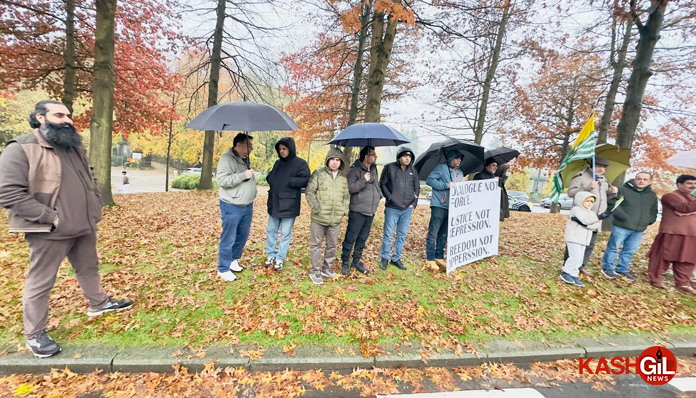
In the Haveli district of Pakistan-administered Kashmir, a court has declared Murtaza Sharif Mir, Faisal Javed Mir, and Waqar Qamar Mir—core members of the Jammu and Kashmir Joint Awami Action Committee—as ‘proclaimed offenders’ (absconders). The court has ordered them to appear before it by December 5.
Following the court’s order, notices declaring these three individuals as absconders have been posted in the Khurshidabad Bazaar.
At this stage of the judicial proceedings, a question arises: while the court is declaring these three individuals as absconders for failing to appear, several other people associated with the same movement have already been arrested—yet they, too, have not been presented before the court.
The fact that arrested individuals—including Awami Action Committee leader Shaukat Nawaz Mir and others—are not being produced in court has raised questions regarding the ongoing judicial and administrative processes in the region.
Local observers point out that if a case is pending against an individual and that person is in the custody of law enforcement agencies, producing them before the court is a fundamental requirement of legal procedure. However, the current situation in Haveli presents a contradiction: while some individuals have been declared absconders—with notices posted for their arrest—the failure to produce those already in custody before the court remains a point of concern.
This situation underscores a critical question: to what extent are court orders being implemented regarding the cases and arrests in Haveli, and what is preventing the authorities from producing the arrested suspects before the court? The proceedings scheduled for December 5 will clarify whether the three individuals declared as proclaimed offenders appear before the court; meanwhile, the appearance of those already in custody also holds significant importance in the judicial proceedings.
Share this content: