Kashgil News
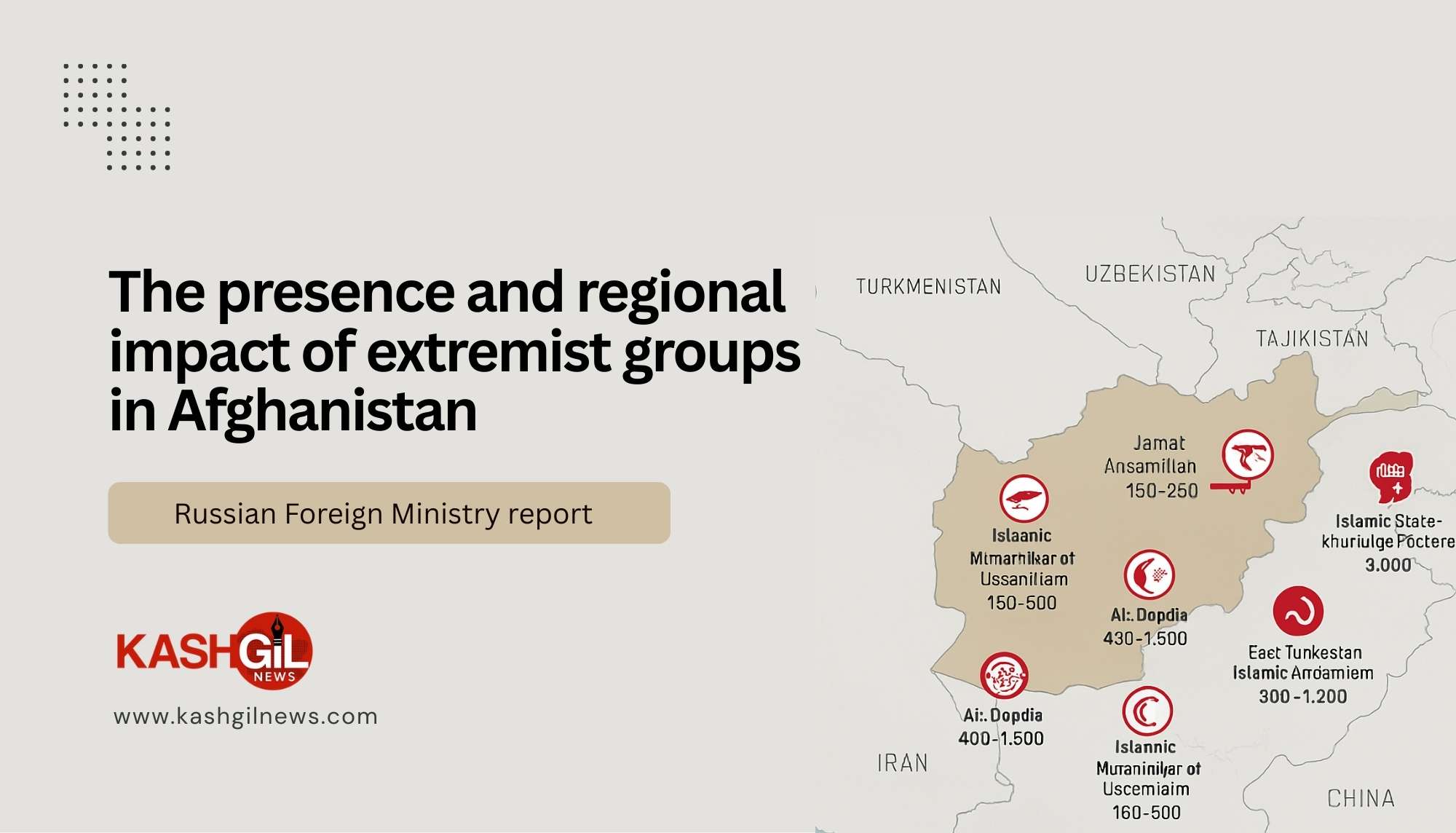
The Russian Foreign Ministry has issued a detailed report on the current military and political situation in Afghanistan. The report provides an overview of the number of extremist groups, their activities and their potential regional impact.
Security situation
The situation in Afghanistan remains complex and fragile. According to Russian estimates, there are 20,000 to 23,000 militants active in the country. More than half of them are foreign citizens, who belong to countries outside Afghanistan.
Major groups and their numbers
ISIS-Khorasan (ISKP): Approximately 3,000 fighters
Tehreek-e-Taliban Pakistan (TTP): 5,000 to 7,000 fighters
Al-Qaeda: 400 to 1,500 members
East Turkestan Islamic Movement: 300 to 1,200 fighters
Islamic Movement of Uzbekistan/Turkistan Islamic Party: 150 to 500 fighters
Jamaat Ansarullah: 150 to 250 fighters
Threat analysis
According to the report, ISIS-K is the only group directly fighting against the Afghan authorities. It has camps, bases and secret cells, but it does not have the ability to maintain control over large areas. The presence of other groups is a destabilizing factor for Afghanistan and the region, which may also have implications for global security.
Diplomatic position
Russia stressed that the international community should pay attention to Afghanistan’s security and socio-economic challenges. The report is part of Russia’s ongoing analytical and diplomatic engagement. The Foreign Ministry clarified that the situation in Afghanistan is being monitored continuously.
Regional Analysis
The presence of extremist groups in Afghanistan poses not only a threat to internal security but may also affect other countries in the region:
Pakistan: The activities of the Tehreek-e-Taliban Pakistan (TTP) are directly linked to Pakistan’s internal security, and their strong presence in Afghanistan is a major challenge for Pakistan.
Central Asia: Groups from Uzbekistan and Tajikistan (Islamic Movement of Uzbekistan, Jamaat Ansarullah) pose a threat to Central Asian states, which increases Russia’s security concerns.
China: The presence of the East Turkestan Islamic Movement is a sensitive issue for China’s Xinjiang region, and Beijing is closely monitoring it.
Global: The activities of ISIS-K are linked to global terrorist networks, which may pose a threat to international security.
Conclusion
The Russian report describes Afghanistan as a “destabilizing center,” where the presence of various extremist groups is directly affecting the countries of the region.
In this context, Russia’s diplomatic appeal is a warning to the international community that ignoring the situation in Afghanistan could have serious consequences for the region and the world.
Share this content: