By : Hussain Sajid
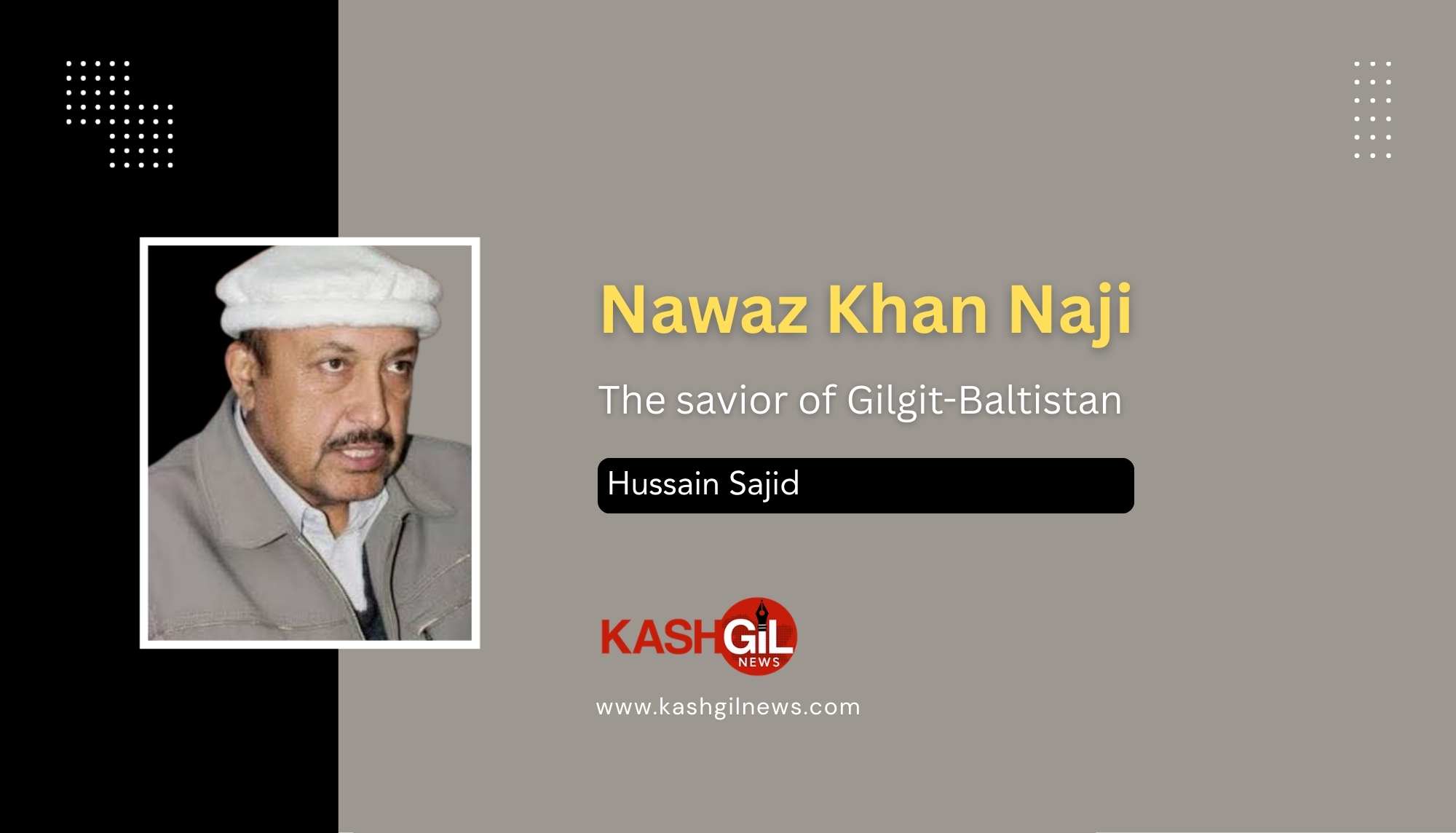
If we say that Nawaz Khan Naji is the most popular political figure in Gilgit-Baltistan, it would not be entirely wrong. His decades of activism and legislative service have had a real, transformative impact on his region.
As the founder of the Balwaristan National Front in 1989, he established the first organized political platform that gave a collective voice to the people of Gilgit-Baltistan, shifting local politics from essentially passive concessionary to active citizenship.
His 2011 electoral victory—defeating the ruling party’s candidates in the governor’s home constituency—proved that the Awami Tehreek can dominate the federal machinery, inspiring the younger generation to get involved in regional politics.
In the assembly, Naji’s consistent advocacy forced the federal government to acknowledge Gilgit-Baltistan’s disputed status in official discourse, a diplomatic achievement that no administrative appointee had achieved. He successfully blocked attempts by the Federal Board of Revenue to impose self-imposed taxation by challenging its jurisdiction over the disputed territory, saving local traders and landowners from unnecessary financial burdens.
His campaigns against the Gilgit-Baltistan Council’s monopolization of resources drew national attention to the exploitation of Gilgit-Baltistan’s minerals and water by external actors, pressuring authorities to consider local mining licenses and community benefit-sharing frameworks. Naji’s defense of local land rights to prevent several illegal land acquisitions by non-local entities, preserved ancestral lands for the original inhabitants of Gilgit-Baltistan. His secular nationalism actively reduced sectarian tensions in Ghizer, by building a sectarian political alliance that prioritized regional identity over religious divisions, contributing to local peace during periods of violence.
Unlike politicians who disappear between elections, Naji has established permanent constituency offices where citizens can access legal aid, dispute resolution, and administrative guidance without bureaucratic hurdles. His international law-based arguments have elevated Gilgit-Baltistan from a domestically neglected territory to a disputed territory for a UN-mediated solution, drawing global attention to human rights that has spared local activists from severe repression.
By surviving for three decades without compromise or corruption, Naji has proven that ethical politics is workable in Gilgit-Baltistan, setting a model for future leaders. His significance lies not in grand infrastructure projects. Federal restrictions limit such options—but in permanently changing what the people of Gilgit-Baltistan can believe: that they can demand rights, win elections, and hold representatives accountable.
Naji built the political consciousness that makes the future autonomy of Gilgit-Baltistan conceivable, and this fundamental contribution is far more important than any concrete structure because it empowers generations to build what they could not have accomplished alone.
Share this content: