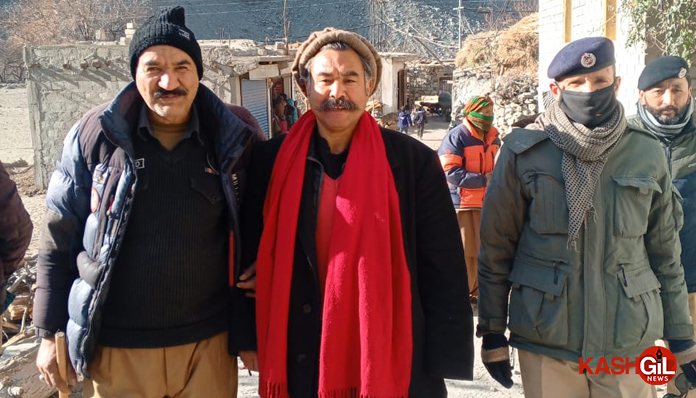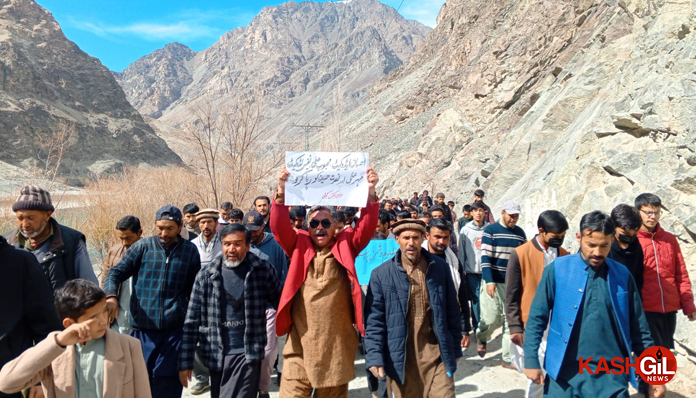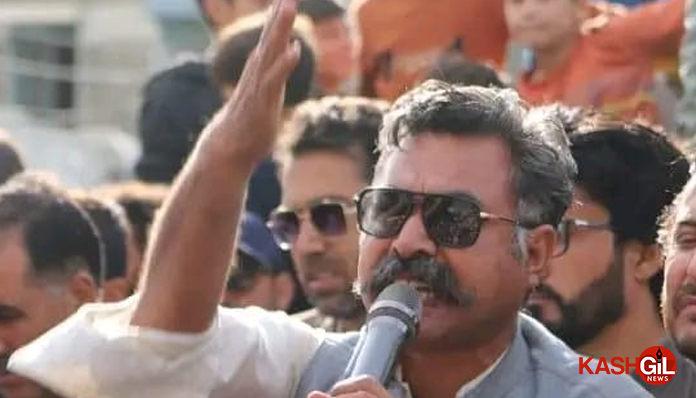
In Pakistan-administered Gilgit-Baltistan, Gilgit-Baltistan United Movement (GBUM) chief Shabbir Mayar has issued an open letter to the nation against state repression, restrictions on movement and lack of treatment, in which he expressed serious concerns about his health, political activities and government behavior.
In the letter, Shabbir Mayar said that Gilgit-Baltistan is a region that has been suffering from a political, constitutional and human rights crisis for decades, and the lives of its citizens have become unsafe at the hands of the state machinery. According to him, the balance of authority and accountability in this semi-colonial system has deteriorated badly.
Shabbir Mayar said that he has been suffering from a heart condition since 2018 and doctors in Baltistan have referred him to Pakistan for better treatment, but government agencies are continuously refusing to allow him to travel. According to him:
For the past two years, he has been confined to his own village under Schedule IV.
His name has been included in Schedule IV for nine years.
During this period, he has been arrested several times and has been kept under de facto house arrest for two years.
He called it a “political punishment” rather than an administrative one.
In his letter, Shabir Mayar raised several fundamental questions, including whether belonging to a persecuted nationality is a crime and whether political dissent is such a big threat that even a sick person’s treatment should be withheld.
He said that state institutions are using even a basic human right like treatment as a weapon of political control, which is a form of collective punishment.
Shabir Mayar appealed to the United Nations, international human rights organizations and justice-loving individuals around the world to take notice of his case, because the right to life, the right to treatment and the right to freedom of movement are internationally recognized basic human rights, the restriction of which is not morally justifiable for any state.
“Silence leads to the consolidation of oppression”
At the end of the letter, he said that a person of an oppressed nationality should not be forced to fight against state oppression along with illness, because silence strengthens oppression, while raising one’s voice is tantamount to fulfilling a responsibility before history.
Share this content: