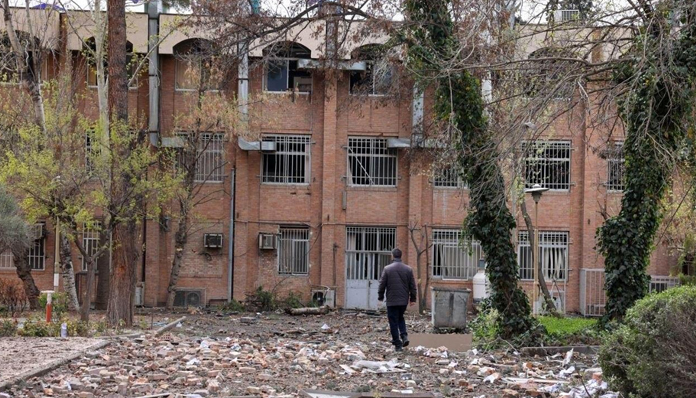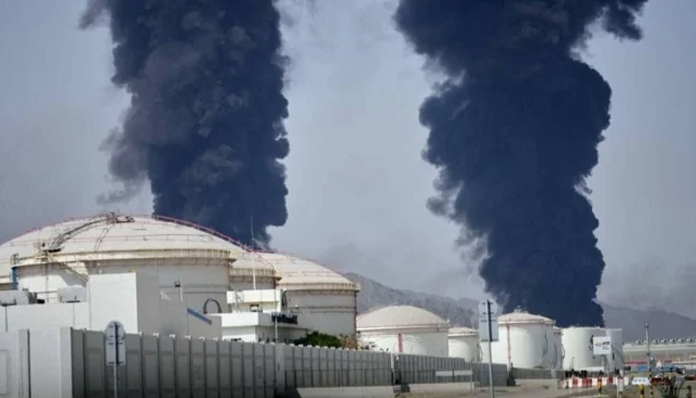
Iran’s severe attacks on Middle Eastern countries continue. Several units have been shut down after severe attacks on Kuwait and Qatar’s energy facilities.
As a result of the attacks, Qatar’s LNG exports have decreased by 17 percent, causing Qatar to face an annual loss of $20 billion.
The Kuwait Petroleum Corporation says that the Mina Al-Ahmadi Refinery of the National Petroleum Company was targeted by drones on Friday morning, after which a fire broke out in several production units of the refinery.
The statement said that according to initial reports, no casualties were reported as a result of these attacks.
According to the Kuwait Petroleum Corporation, fire and emergency teams have immediately started efforts to control the fire.
As a precautionary measure, several units of the refinery have been shut down and necessary measures are being taken to ensure the safety of all workers and the site.
Qatar’s energy minister, meanwhile, said the attack on the Ras Laffan facility would reduce Qatar’s liquefied natural gas (LNG) export capacity by 17 percent over the next five years, costing the country $20 billion in annual revenue.
The industrial processing unit produces LNG by cooling natural gas to very low temperatures using trains. The Qatari minister said the Iranian attacks damaged two of the plant’s 14 trains.
Iran said the attack on Ras Laffan was in response to an Israeli attack on its South Pars gas field on Wednesday.
Ciaran Rowe, chief commercial officer at Singapore-based clean fuel market intelligence firm HighSight, told the BBC that the five-year period is not just a repair but “a complete rebuild.”
Asian countries, particularly Japan, South Korea, India and China, are the most reliant on Qatari LNG. In Europe, Italy and Belgium are also among its biggest customers. Europe has become increasingly dependent on Middle Eastern gas after turning away from Russian imports as a result of the war in Ukraine.
Qatar is one of the biggest players in the global natural gas market.
“Fear could linger in the market for months, if not years,” Rowe said.
“It will change the way governments think about importing LNG.”
LNG is a vital source of energy, used to heat people’s homes, cook food and even power ships and factories. It is used in the process of making fertilizer for farming.
Share this content: