A new analysis has found that Iranian attacks on US military bases in the Middle East have cost US$800m (£600m) in two weeks.
The Centre for Strategic and International Studies (CSIS) report and BBC analysis show that much of the damage was caused by Iranian retaliation in the first week of the war by the US and Israel.
The full details of the damage to US assets are unclear, but the $800m estimate to US military infrastructure – far higher than previously reported – suggests the heavy cost to the US as the war drags on.
“The damage to US military bases in the region has been underreported,” says Mark Kansin, a senior adviser at CSIS and co-author of the report. The damage appears to be substantial, but the exact figures will only become clear when more information becomes available.
The BBC asked the US Department of Defense for comment, but they referred it to US Central Command, which is leading the war. US Central Command has not yet commented.
Iran has targeted US air defense systems and satellite communications systems in Jordan, the United Arab Emirates and other countries in the Middle East in its retaliatory actions.
The largest damage was caused by the targeting of the THAAD missile defense system radar at a US base in Jordan.
According to CSIS, the AN/TPY-2 radar system costs about $485 million. The system is used to shoot down ballistic missiles from a distance.
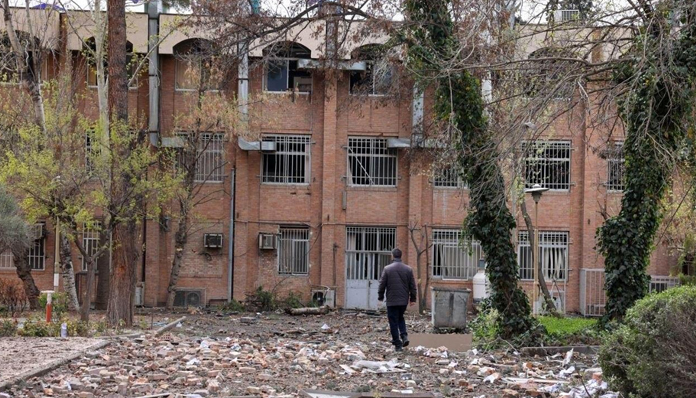
The Iranian attacks also caused an additional $310 million in damage to buildings, installations and infrastructure at US military bases in the region.
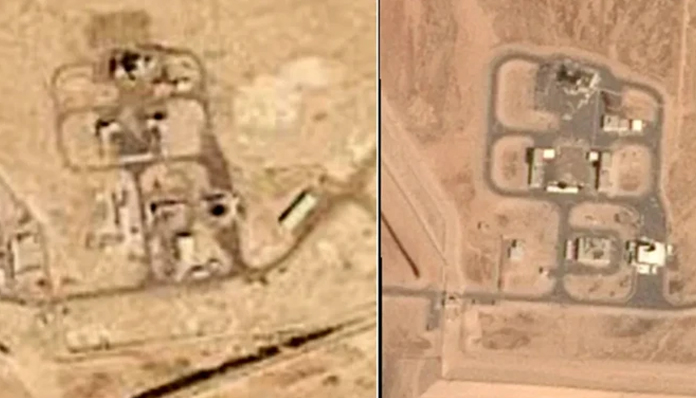
BBC Verify satellite analysis shows Iran has repeatedly targeted at least three air bases. The attacks suggest Iran is repeatedly targeting specific US assets.
Russia has also reportedly provided Iran with intelligence on US military activity in the region.
Satellite images show fresh damage at various times at Ali al-Salem airbase in Kuwait, Al-Udeid airbase in Qatar and Prince Sultan airbase in Saudi Arabia.
Thirteen US military personnel have also been killed in the war since President Donald Trump launched a joint operation with Israel against Iran on February 28.
According to the US-based Human Rights Activists news agency, the war has killed around 3,200 people, including 1,400 civilians.
President Trump says the United States is close to achieving its goals, which include destroying Iran’s nuclear program, weakening its conventional military capabilities, and cutting off support for proxies in the region.
“We’re doing a great job in Iran,” he said.
However, the war has dealt a severe blow to the global economy, especially with the closure of the Strait of Hormuz and uncertainty about how long the war will last and whether President Trump will send ground troops.
Restrictions on U.S. companies from acquiring satellite imagery have made it difficult to accurately assess the damage.
Nevertheless, there have been some clear trends in Iran’s retaliation targeting U.S. military interests.
The Iranian attack on a U.S. naval base in Bahrain at the beginning of the war made it clear that Iran was targeting radar and satellite systems. These facilities are the eyes and ears of modern military operations.
Satellite images also show the destruction of two radar domes designed to protect sensitive equipment. It is likely that the systems inside were also severely damaged, but no further details are available.
Radar installations were also targeted at Camp Arifjan in Kuwait and Prince Sultan Air Base in Saudi Arabia. Smoke can be seen rising from a part of the THAAD system in images from Prince Sultan Air Base.
THAAD systems installed at US bases in the United Arab Emirates and Jordan were most severely damaged. The exact cost of the damage is not known. Due to the damage to these systems, the US had to move THAAD components from South Korea to the Middle East.
This loss from the Iranian attacks is only a fraction of the total US war costs.
According to reports, the US Department of Defense told members of Congress in a briefing that $11.3 billion was spent in the first six days of the war, which rose to $16.5 billion by the 12th day.
The Pentagon has requested another $200 billion for the war.
According to Defense Secretary Pat Hegseth, the amount “could go up.”
“You need money to kill bad guys,” he said.
Share this content: