Freedom House, a global organization monitoring international human rights and democratic freedoms, has released its latest annual report, “Freedom in the World 2026.” The report provides a detailed assessment of the state of political and civil liberties in Pakistan-administered Kashmir (comprising Gilgit-Baltistan and Azad Jammu & Kashmir).
According to the report, these regions have been classified as “Not Free,” as state and administrative restrictions on fundamental political rights, freedom of expression, and public protest remain firmly in place.
Key Highlights and Findings of the Report:
Political Rights and the Right to Vote:
Lack of Public Participation in Decision-Making: The report highlights that critical administrative, economic, and policy-making powers rest with Islamabad and federal institutions rather than the local assembly.
Restrictions on the Political Process: Only those political parties and candidates that adhere to the state-mandated ideological and constitutional framework are permitted to participate in elections or engage in the political process; conversely, political organizations advocating for self-determination or holding independent stances face severe harassment.
Civil Liberties and Press Freedom:
Censorship of the Press: Local journalists, editors, and media houses face intense administrative pressure and covert censorship. Journalists who report in ways that diverge from Pakistan’s national security narrative, or who speak out against corruption and human rights violations, face threats and arrests.
Internet and Communication Shutdowns: The suspension of internet services and mobile networks is used as a tool during public protests, sit-ins, or periods of political unrest.
Public Protests and Repression (Right to Assembly):
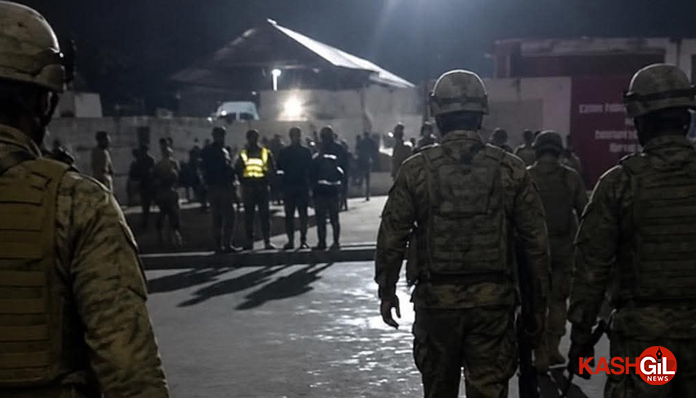
Public Action Committee and Attempts to Suppress Protests: Efforts were made to stifle movements led by the Jammu Kashmir Joint Public Action Committee (JKJAAC)—which advocated for relief from inflation and taxes and demanded basic rights—through the use of force, arbitrary arrests, and the imposition of Section 144.
Use of Force: The report specifically highlights the occupation of educational institutions and public properties by security forces, as well as incidents of baton-charging peaceful protesters.
Detention and Enforced Disappearances:
The report expresses grave concern over the trend of taking active political workers, human rights defenders, and nationalist leaders into police custody, subjecting them to enforced disappearances, or holding them in illegal detention.
Kashgil News’ Analytical Perspective:
This Freedom House report clearly confirms that the public unrest and the rise of platforms like the Public Action Committee in Pakistan-administered Kashmir are not merely transient phenomena; rather, they are the result of decades of deprivation regarding fundamental political, economic, and human rights. The fact that international organizations are highlighting the deteriorating state of freedoms in the region reinforces the legitimacy of local public demands on the global stage.
Share this content: