Under the United Nations human rights framework, several Special Rapporteurs and Working Groups have issued a detailed and stern communication (Ref.: AL PAK 4/2026) to the Government of Pakistan. The communication addresses the banning of the Jammu Kashmir Joint Awami Action Committee (JAAC) in Pakistan-administered Kashmir (AJK) under the Anti-Terrorism Act (ATA 2014), the indiscriminate use of force by security personnel against peaceful protesters, and the violation of fundamental human rights.
The United Nations has expressed grave reservations regarding the decision by the AJK Home Department on June 5, 2026, to designate the JAAC as a “proscribed organization.”
The report clarifies that the Action Committee is a coalition comprising traders, lawyers, transporters, and civil society activists, who have been engaged in a peaceful struggle for economic, social, and basic political rights since 2023. Labeling the Action Committee as a “terrorist” entity—without providing any internationally recognized evidence—constitutes a severe violation of international law, particularly the International Covenant on Civil and Political Rights (ICCPR).
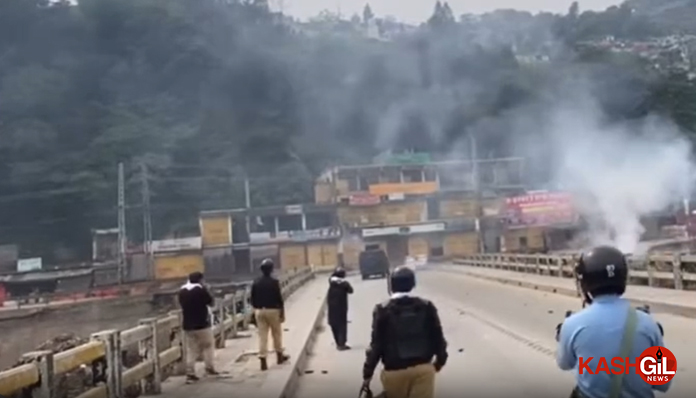
The communication notes that until just days before the ban (May 28, 2026), both the AJK administration and the federal government were engaged in formal negotiations and had reached agreements with representatives of the JAAC. The sudden application of a “terrorist” label to the Action Committee—occurring ahead of the assembly elections (scheduled for July 27, 2026) and coinciding with a campaign to abolish the 12 reserved seats for refugees—suggests an act of retaliation. To suppress the protests and the “long march” from Rawalakot to Muzaffarabad that began in June 2026, security forces employed heavy shelling, baton charges, and the use of live ammunition.
According to the United Nations, at least 96 peaceful protesters have been killed so far, a large number of whom were young people aged between 15 and 35.
Reports indicate that the families of the deceased were coerced into signing documents—as a condition for receiving the bodies of their loved ones—acknowledging that their children were “terrorists.”
According to the report, more than 205 individuals (including women) have been placed on the “Fourth Schedule.” Their national identity cards have been suspended, bank accounts frozen, and passports cancelled, effectively depriving them of access to medical facilities and freedom of movement. Over 70 individuals, including journalists, have been arrested under anti-terrorism laws.
The United Nations has characterized the state’s actions—which include the suspension of internet and mobile services across the entire region, the imposition of curfews, the closure of hospitals, and the denial of medical aid to the wounded—as “collective punishment.”
The United Nations has requested a response from the Government of Pakistan within 60 days regarding the following matters:
The legal basis and evidentiary grounds for designating the JAAC as a “terrorist” organization must be presented.
An explanation must be provided regarding the legal avenues available for judicial appeal or relief against this decision.
Detailed information must be provided on the steps taken to investigate the use of force, killings, and severe violence against peaceful protesters. A legal justification should be provided for placing 205 citizens on the Fourth Schedule and stripping them of their citizenship and economic rights.
This communication has been sent jointly by the following international Special Rapporteurs on human rights and counter-terrorism:
Ben Saul: Special Rapporteur on the promotion and protection of human rights and fundamental freedoms while countering terrorism.
Ganna Yudkivska: Chair-Rapporteur, Working Group on Arbitrary Detention.
Morris Tidball-Binz: Special Rapporteur on extrajudicial, summary or arbitrary executions.
Gina Romero: Special Rapporteur on the rights to freedom of peaceful assembly and of association.
Leopoldo Maldonado Gutiérrez, and others.
Share this content: