by: Muhammad Khurshid Baig
If only the world could grasp our suffering! If only someone could look into our eyes and see the tears that have lingered behind our eyelids for years. If only someone could feel the fire smoldering within our chests—a fire that has wounded even our very souls. Believe me, today my heart is not merely sad; it is shattered. My soul is restless, and an ocean of emotions is raging like a storm within me. We Kashmiris are a uniquely unfortunate people. Our land is one, our soil is one, the waters of our rivers are one; our mountains, valleys, languages, culture, and history are all deeply intertwined. Yet, a “bloody line” has been drawn between us—a line that has severed us from our own families, our own kin, and other parts of our own homeland. For the past 78 years, we have been unable to move freely across the regions of the State of Jammu and Kashmir—places where our ancestors once maintained ties, where our cultural roots lay, and where the traces of our land, our history, and our identity still endure.
A bloody line has torn brother from brother, mother from son, and family from family. Some have a sister left on the other side; others have lost a brother across that divide. Many of our elders have passed away without ever being able to touch the soil of their birthplace again. Countless generations have grown old harboring the deep, unfulfilled longing to reunite with their loved ones, and the eyes of so many mothers have turned to stone from the endless, agonizing wait for their children! Yet, this journey of deprivation is far from over. The tragedy today is that we have been rendered strangers on our own soil, in our own city. Rawalakot—our beloved city of affection—is a place where we first opened our eyes, where we spent our childhood, where the vibrancy of our lives once thrived in its marketplaces, and where our tales of love are intertwined with its very mountains. Yet, today, we cannot even enter Rawalakot. We are deprived of the ability to breathe freely or lead a normal life.
For the past four and a half months, the city has been gripped by curfews and restrictions, held under the occupation of Pakistani forces. The heavy presence and control of these forces have left the citizens feeling besieged and powerless within their own city. Just consider this: what a tragedy it is that tourists from across the globe travel to witness the beautiful valleys, snow-capped peaks, lakes, rivers, and lush green plains of the State of Jammu and Kashmir—arriving from Europe, America, the Arab world, and distant corners of Asia. While the doors to our mountains remain open to tourists, we ourselves are barred from traveling to other parts of our own state; indeed, even moving freely within our own city of Rawalakot has become nothing more than a dream. But why?
Are we not the inhabitants of this land? Is our love for this soil any less than that of anyone else? Do we have no claim to our own rivers, mountains, forests, and valleys? Is it an unreasonable demand to simply walk the streets of one’s own city, meet with loved ones, send one’s children to school, conduct business, and live a life free from fear? We ask the world for no palaces, no thrones, nor crowns; we merely seek the right to live upon our own soil. We wish for our children to grow up not in the shadow of fear, but in an atmosphere of peace; for our marketplaces to thrive, our schools to remain open, and our hospitals to function as they should. We want our elders to be able to step out of their homes in tranquility, and for our mothers to live with peace of mind—rather than trembling at every knock on the door, fearing the arrival of tragic news.
Is this too much to ask? Today, the silent streets of Rawalakot pose this question to us; the deserted marketplaces tell a tale of our helplessness, and the closed doors lament our profound deprivation. Once, life smiled within these streets; the voices of children echoed, shops bustled with activity, and people shared in one another’s joys and sorrows. Today, the residents of this very city are anxious, yearning for news of their own home. Some worry for their loved ones, others for their livelihoods or the future of their children—while many are haunted by a single, restless question: when, at last, will the simple, ordinary joys of life return to us?
In the corridors of global power, grand claims are made regarding human rights, freedom, peace, and human dignity. International institutions recite charters on the protection of human rights; conferences are held, and resolutions are passed—but do these words retain any meaning when an individual is denied the freedom of movement within their own city? Are human rights reserved only for powerful nations? Are the tears of a Kashmiri mother, the fear of a child, the unemployment of a laborer, and the ruined shop of a small business owner not enough to stir the global conscience? Our voice may not reach the high halls of the world, but our pain is real. The tears in our eyes are not part of some political slogan; our deprivations are not mere words in a written agreement—they are the bitter realities of our daily lives.
I address the world today not as a journalist, but as a Kashmiri. My heart is heavy, and my spirit is wounded. It aches when I think of the severed parts of my homeland, and the pain becomes indescribable when I envision my own city—Rawalakot—with its blocked streets, deserted markets, and besieged people. What, then, is our fault? Is it a crime to love one’s own land, to speak of one’s rights, to raise a voice for one’s people, or to simply desire—as others across the globe do—to live a life of honor, freedom, and dignity?
We appeal to the United Nations, international human rights organizations, the European Union, and all conscientious people across the world: please, listen to our voice. Do not view Kashmir solely through the lens of maps, borders, and political interests. Here, human beings reside—mothers, children, sisters, and the elderly. There are dreams, relationships, and a people who, for decades, have harbored a longing for their lost homeland and a return to a normal human existence.
We seek the right to free movement for the people across all parts of the state of Jammu and Kashmir, the protection of fundamental human rights for all citizens, the lifting of the curfew and all unnecessary restrictions in Rawalakot, and the opportunity for people to live in peace, dignity, and freedom, rather than in fear and under oppression.
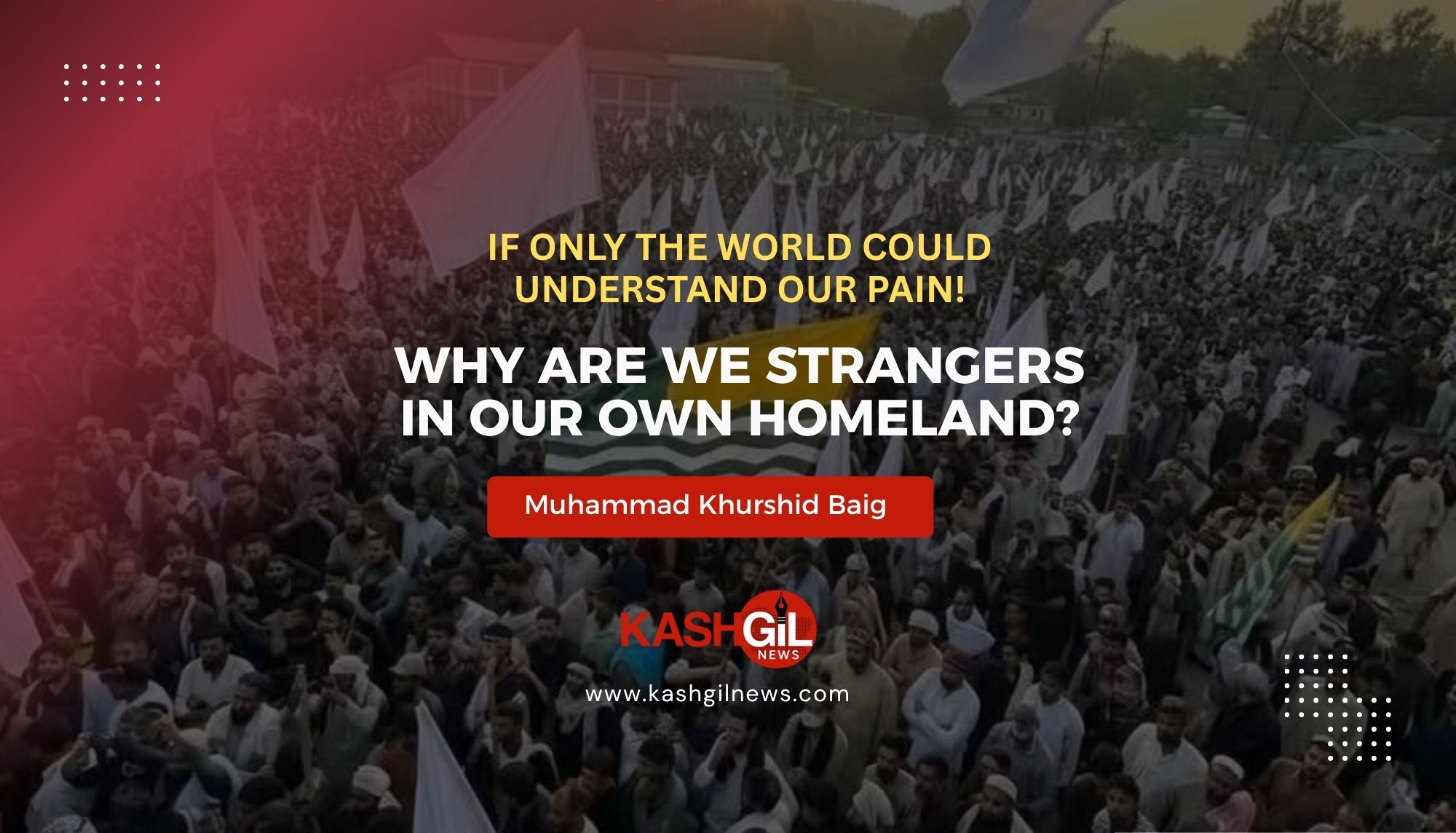
If only someone would look our way! If only someone could understand the language of our pain. If only this plea—meant to stir the conscience of the world—could finally be heard. We love our land; we cherish our mountains, our rivers, and our valleys. How can we survive, severed from the soil of our own homeland?
We ask only this: why are we strangers on our own soil? From the depths of our hearts, a single cry emerges: may the world understand our pain—before our tears run dry, our dreams perish, and our future generations are left to accept this deprivation as their inevitable fate. We do not want war; we want peace. We do not want hatred; we want love. We do not want restrictions; we want freedom. Above all, we demand the right to live a dignified life on our own land. We are Kashmiris; our land is one, our pain is one, and our aspiration is one: to be granted the right to live in our homeland with freedom, peace, and human dignity.
Share this content: