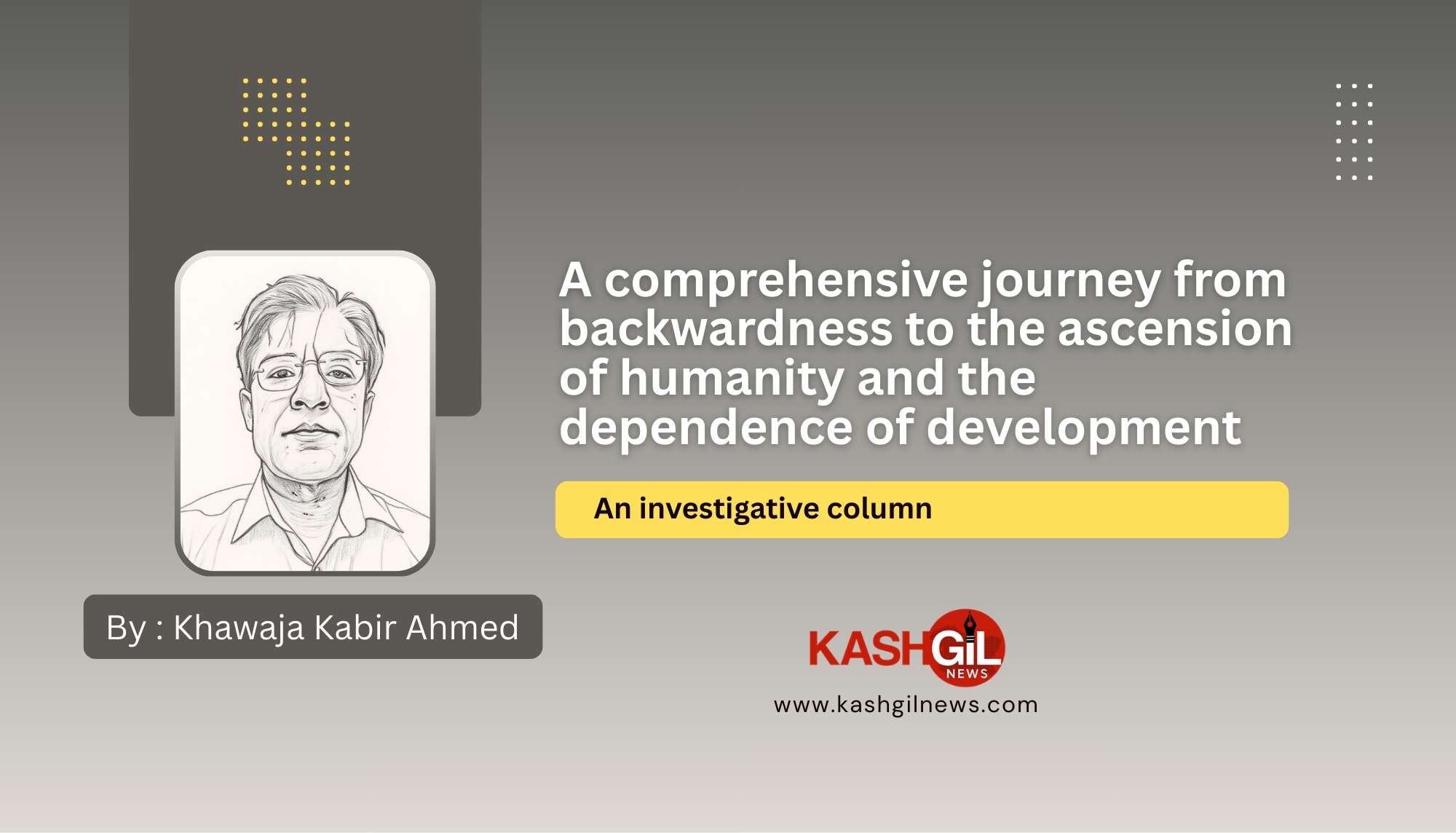
By: Khwaja Kabir Ahmed
World history is a witness to the fact that no society remains backward forever, nor is any development guaranteed forever. The real difference lies in vision, leadership, collective character and moral foundations. Societies that were once plagued by poverty, unrest, disease, illiteracy and political chaos have today become symbols of progress, prosperity and human dignity on a global scale. All that is needed is to decide which path to take for development and prosperity and which stages to go through. If the decision is truly in line with the clear goal of making one’s mark and making a name for oneself in the world, then the journey can be started from anywhere, at any time and under any circumstances.
Germany, which was devastated after the Second World War, is today one of the strongest economies in Europe. Similarly, Japan rose from the ruins after the nuclear disaster and became a leading economy in the world through education, research and industrial discipline. Singapore, despite its lack of resources, transformed itself into a global trading hub through transparent governance, strict accountability, and quality education. South Korea emerged from post-war poverty to become a global leader in technology and industry. Rwanda in Africa became a rapidly developing country after the genocide through political stability, women’s inclusion, and the eradication of corruption. Malaysia transformed itself from a middle-income country into a modern economy through economic reforms and industrial strategies in a multicultural society. Similarly, China lifted millions of people out of poverty through reforms and export-oriented industrial policies.
A few common elements stand out in all these examples: prioritizing education, the rule of law, zero tolerance for corruption, including women and youth in national development, and above all, creating a common national narrative. Development is not just about roads and buildings; it is about building minds, strengthening values, and restoring collective trust. Economic development is also not sustainable if a society lacks moral foundations.
The first step to building a better society is a change in mindset. Unless people realize their responsibilities, no project will succeed. It is the responsibility of every individual to abide by the law, adopt integrity, not only reject corruption but also raise their voice against it. It is the responsibility of parents to give their children not just degrees but also character. It is the duty of teachers to promote research, critical thinking and moral training. Businessmen should prioritize honesty along with profit. Politicians should prioritize service over power. The media should create awareness instead of sensationalism. This is the collective character that strengthens the society from within.
The state of Jammu and Kashmir, especially the one under Pakistan administration, has immense potential in terms of natural resources, young population and geographical importance. But planning, transparency and social harmony are necessary to make the potential a reality. First of all, investment should be made in quality education and technical training so that the youth can become job creators and not just job seekers. Modern skills should be promoted in sectors like tourism, agriculture, hydropower and IT. Local governments should be empowered so that the process of development reaches the grassroots. A system of accountability should be established that transcends political affiliation.
Along with this, moral revival is inevitable. If society cannot establish an atmosphere of mutual respect, tolerance and unity, all development projects will stand on weak foundations. The best person is the one who sees the collective interest before his own benefit. The best society is one where the weak are safe, women are empowered, the youth get decent jobs, and the elderly live with dignity. The real criterion of development is not per capita income but the availability of human dignity and justice.
The successful societies of the world have taught us that the journey of development is long but not impossible. The only condition is that the nation sets its own direction, bases itself on moral principles, and each individual considers himself a part of the change. When state policy, collective vision and individual character move in the same direction, the darkness of backwardness cannot last long. This path can be a beacon of light for every society, including Jammu and Kashmir, that dreams of reaching the pinnacle of humanity.
Share this content: