Islamabad/Kashgil News
The sudden increase in the price of petrol and diesel by Rs 55 per liter in Pakistan came within a week of the escalating war between the US, Israel and Iran, after which a new scenario of additional revenue of billions of rupees has emerged in the petroleum sector.
According to government and private sources associated with the petroleum sector, the federal government is currently collecting about Rs 105 per liter on petrol and diesel in the form of various levies and taxes. At this rate, the consumption of petroleum products in the country has become a source of huge financial income for the government on a daily and monthly basis.
According to statistics, the total average consumption of petrol and diesel in Pakistan is about 70 to 80 million liters per day. If government taxes and levies are calculated at the rate of Rs 105 per liter, the federal government receives about Rs 735 to 840 million per day in the form of taxes and levies alone. If we look at the same ratio, the government’s revenue can reach about Rs 5,145 to 5,880 crore per week, while the monthly profit can reach about Rs 22,050 to 25,200 crore.
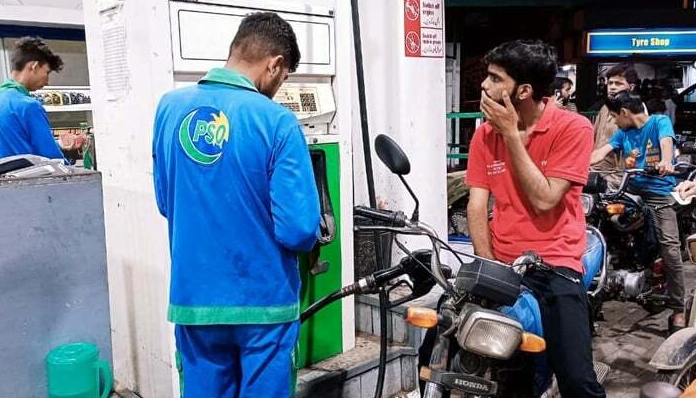
According to experts, after the increase in petroleum prices by Rs 55 per liter, the government’s tax collection also increases significantly because along with the effects of inflation, other indirect taxes and economic activities are also affected. Meanwhile, according to sources in the petroleum sector, about 11,800 petrol pumps are operating in Pakistan and an average of 40 to 60 thousand liters of fuel can be stored at each pump. This means that the stock of petroleum products across the country is about 500 to 600 million liters. Due to the sudden increase in prices, it is being shown that oil companies and pump owners are likely to get an immediate profit of about Rs 30 to 32 billion on old stock.
According to economic experts, this increase has the biggest impact on the common citizen. A typical family that consumes about 100 liters of petrol per month will now have to pay an additional Rs 5,500. The impact of this increase could spill over to transport, agricultural production, industrial costs and daily services, triggering a new wave of inflation. On the other hand, the global market has reported only a 5-7 percent increase in petroleum product prices in recent weeks, while the price increase in Pakistan has reached about 20 percent.
Neighboring countries such as India, Bangladesh and other Asian states have kept prices relatively stable despite limited increases in the global market so as not to put immediate economic pressure on the people. Economic observers say that this situation has raised an important question: will the additional revenue of thousands of crores of rupees from the petroleum sector be spent on public welfare or will this revenue simply become a means of meeting the government’s fiscal deficit?
According to a research study, Pakistan’s petroleum sector has now become an economic arena where a clear and dangerous contradiction has arisen between the public interest, government revenue, and private profit, and its effects are directly affecting the daily life of every citizen.
Share this content: