Research and Writing: Khwaja Kabir Ahmed
I have always had a deep passion for reading, understanding and knowing the historical roles of historical figures who changed the course of history. During this academic quest and search, my eyes fell on the life of Zohra Dogan of Kurdistan, which left a deep impression on my heart and mind and I was deeply moved by her harrowing but courageous story. While reading about her, I realized that Zohra Dogan’s story is not just the story of one individual, but rather it is a mirror of the suffering of all oppressed nations around the world where women are facing the worst political and social hardships.
Especially when I reflected, I saw a deep similarity between the conditions, geographical irony and political oppression of the state of Jammu and Kashmir and Kurdistan, which made me think that there are many such “Zehra Dogans” on the land of Kashmir who have silently become mountains of determination and independence. This is why I decided to combine the lives of the courageous women of these two regions in order to acknowledge their eternal struggle and, through this joint writing, to encourage women around the world, especially from the oppressed and downtrodden classes, and to give them the message of how to keep the candle of determination burning even in the worst of circumstances.
In the case of Zehra Dogan, this story of determination and courage began in 1989 in the Kurdish-majority city of Diyarbakir, Turkey, where she witnessed the fight for her identity and rights very closely and chose journalism and art to make her voice a weapon for the oppressed. Her greatest achievement was co-founding the news agency ‘JINHA’ in 2012, the first of its kind in Turkish history to have all its staff, reporters and managers be women, in order to bring the problems of the marginalized to the world with their own language and feminine sensibilities.
When ISIS unleashed its atrocities on women in Iraq and Syria, Zehra risked her life to the front lines and presented their stories to the world under the title “Screams of Yazidi Women”, for which she was awarded Turkey’s prestigious Metin Göktepe Journalism Award. The biggest test of Zehra Doğan’s life came in 2016, when she was reporting on the ongoing military operation in the Turkish town of Nusaybin and, seeing the devastation, she created a digital painting depicting flags and military vehicles flying over piles of rubble as scorpions. This painting was so offensive to the rulers of the time that the court declared it “terrorist propaganda” and sentenced Zahra to 2 years, 9 months and 22 days in prison, but they forgot that true art does not need imprisonment.
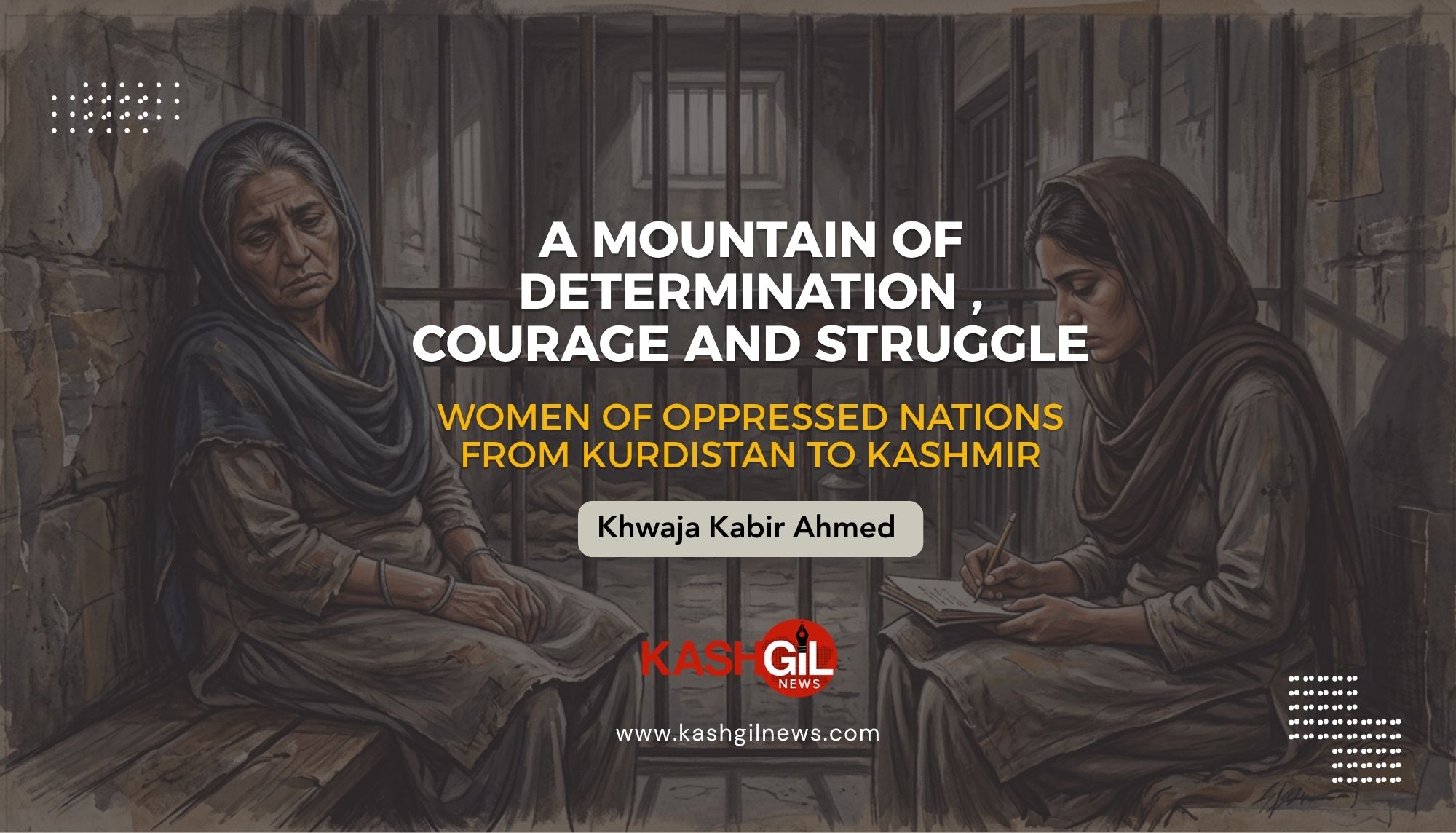
Inside the prison, Zahra was banned from using paint, canvas, brushes and even paper, but this was the time when she emerged as a mountain of determination and courage and instead of surrendering to the hardships of prison, she made the things around her her canvas. In the absence of paint, she ground turmeric, coffee grounds, cigarette ash, tea leaves and garden herbs into paints, and to highlight the pain of women and the hardships of imprisonment, she also put her menstrual blood on the canvas. She made painting brushes from bird feathers that fell in the prison yard and tied her own hair, and created dozens of masterpieces using old newspapers, cardboard boxes, towels, and bed sheets instead of canvas.
She also started publishing a secret handwritten newspaper, “Free Agenda Dungeon,” with other female prisoners inside the prison, which was distributed to the outside world. Her silent but powerful resistance broke through the prison walls and caused an international stir, and the world’s most famous street artist, Banksy, created a 70-foot-long mural on a wall in New York to commemorate Zehra’s days in prison. Even after her release from prison in 2019, the dangers for Zehra did not end, which forced her to go into exile and live in Berlin, Germany, from where she is still fighting for the oppressed women of the Middle East and the Kurdish people through her art.
The other side of this timeless story of Kurdistan’s Zahra Dogan is found in the valley of the state of Jammu and Kashmir, where women have similarly created a new history of determination in the face of the worst military sieges, imprisonments and state reprisals, and it is this similarity that prompted me to link these two regions. In Kashmir, Parveena Ahangar, known as the ‘Iron Lady of Kashmir’, had a peaceful life shattered in 1990 when her young son was forcibly taken from her home by security forces and never returned.
In search of her son, she visited police stations and courts, and when she realized that she was not alone, but that there were thousands of mothers whose children had gone missing, she founded the Association of Parents of Disappeared Persons (APDP) in 1994. Parveena united women whose husbands were missing, known as Half-Widows in Kashmir, and became a symbol of non-violence against oppression by silently protesting in the parks of Srinagar, which resonated internationally and was also awarded the world’s prestigious Rafto Prize. (The Rafto Prize is a renowned international human rights award from Norway, which is awarded annually by the Rafto Human Rights Foundation to an individual or organization that has made a significant and peaceful struggle to defend human rights, democracy and freedom.)
Similarly, the struggle of young Kashmiri photojournalist Masrat Zahra is strikingly similar to the case of Zahra Doghan, who made the courageous decision to pick up a camera in a very harsh and male-dominated region like Kashmir.
Born in the old city of Srinagar, Musrat Zahra has been working as a freelance photojournalist in Kashmir. Her photographs have appeared in The Washington Post, Al Jazeera, The Caravan, The New Humanitarian and other international media outlets. Her focus has been on women, children, the humanitarian impact of conflict and the daily lives of Kashmiri society.
In 2020, she was awarded the International Women’s Media Foundation’s “Anja Nderinghaus Courage to Shoot” award. The award is given in recognition of the bravery and journalistic work of female photojournalists working in dangerous situations around the world. That same year, she also received the Peter Meckler Prize for Courage and Ethical Journalism.
In 2020, the police in Indian-administered Jammu and Kashmir registered a case against her under the Unlawful Activities Prevention Act (UAPA). The police charge was related to posting alleged “anti-national” content on social media; Mussrat Zahra maintained that she was only posting her own journalistic photographs. She later moved out of Kashmir and is now reportedly based in the US, where she also works on conflict, displacement and the lives of migrants.
Musrat captured the atrocities committed against Kashmiri women and children during the conflict and their daily lives on her camera, and her work has been featured in international media. Just like Zahra Dogan’s painting, the candid images captured by Musrat Zahra were not accepted by the ruling elite and in 2020 she was booked under India’s stringent Unlawful Activities Prevention Act (UAPA) for anti-national activities.
Apart from these, women like Asia Indrahi and Fehmida Sofi have set a high example of steadfastness, like the Kurdish women prisoners, by refusing to compromise on their ideals despite being held in high-security prisons like Tihar Jail for decades, despite severe illness and the lack of basic human rights.
The history of both Kurdistan and Kashmir and the lives of these courageous women prove that whenever state pressure on oppressed nations increased, instead of just shedding tears, the women there stepped forward and took the lead in movements, journalism and social struggle and shattered the idol of fear. The stories of Zahra Doghan, Parveena Ahangar, Asia Andrabi and Masarat Zahra give a universal message to the disadvantaged women around the world that determination, courage and strength do not depend on any gender or material resources, and if a person has the path to truth, he can write history with his blood and independence even if he does not have a canvas and paint. For me, all these women are the Himalayas of determination and struggle before whom all the rules of oppression crumble, and this writing is a small acknowledgement of their bravery so that other oppressed women can also find the courage to dispel their darkness with their light.
Share this content: