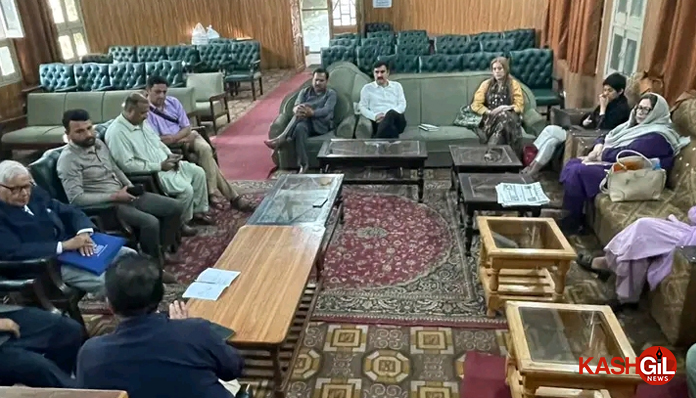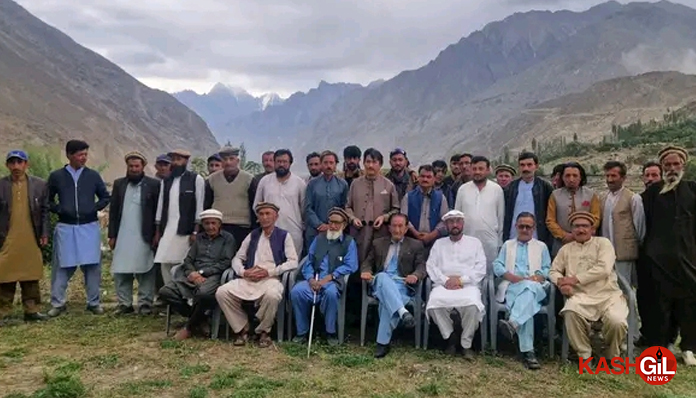
A second major public meeting was held in Imat to address public grievances, the lack of basic amenities, and delays in development projects affecting Imat, Ishkoman, and the upper regions. Individuals from various walks of life participated in the gathering. It was decided to deliberate on a future course of action should there be no tangible progress regarding their demands.
The meeting took place on Wednesday, September 16, 2026, at the Bay Bar Guest House in Imat, Ishkoman, under the leadership of Zafar Muhammad Shadam Khel. Attendees included Lambardars (village headmen), community elders, political party ticket holders and office bearers, candidates for district and union councils, representatives of student organizations, youth, the business community, transport union members, and other prominent figures.
Detailed discussions were held regarding various issues, including the dilapidated condition of roads in Imat and Upper Ishkoman, the state of Basic Health Units (BHUs), incomplete development projects, wheat quotas, law and order, the alleged sale of narcotics, incidents of theft, and outstanding compensation owed to landowners.
Participants demanded the restoration of road connectivity between Imat and the upper regions—specifically the settlements beyond Badswat. They noted that residents of these upper areas have been facing hardships due to the failure to restore the road since May.
Concern was also expressed regarding the alleged delay in the construction of the metalled road from Chitorkhand to Imat. According to the participants, nearly two years have passed since the project was tendered, yet the pace of work remains unsatisfactory. They demanded the immediate commencement of filling, protective wall construction, and excavation work, as well as the completion of the project within the stipulated timeframe.
Regarding the health sector, participants called for the regular attendance of doctors and the provision of medicines and medical facilities at the Imit ‘A’ Class Dispensary, alongside the reinstatement of transferred Grade-16 and Grade-14 employees. Emphasis was also placed on making the Matram Dan and Bulhans dispensaries functional, recalling staff transferred from other health centers in Ishkoman, and addressing medicine shortages.
Concerning development and emergency projects, participants noted that some schemes are allegedly left incomplete or fail to meet deadlines, causing public hardship and placing a burden on the national exchequer. They demanded effective monitoring of emergency projects and their completion in alignment with genuine public needs.
The meeting also addressed the issue of incomplete buildings for the Badswat School, Matram Dan School, and Ishkoman Mominabad Higher Secondary School. Participants demanded the establishment of a clear timeline for completing these long-pending projects and the identification of those responsible for the delays.
Regarding wheat supplies, participants expressed concerns over reductions in the allocated quota, alleged illegal deductions, and the provision of substandard grain; they demanded that quality wheat be supplied to the public according to the fixed quota and that transparency be ensured in the distribution system.
Discussing the law and order situation, participants voiced concern over incidents of theft and the alleged sale of opium, hashish, and locally brewed liquor in Imit and Ishkoman. They stated that 26 incidents of theft had occurred in the area over the past two years; action was taken in only two cases, while no effective progress has been made regarding the remaining 24. Participants also highlighted alleged thefts at places of worship and demanded increased police patrolling and surveillance.
The participants demanded the payment of outstanding compensation to landowners affected by development projects, urging that details of the arrears be compiled and timely payments ensured for the eligible individuals.
It was agreed during the meeting that demands for tangible progress on public issues would continue to be raised with the relevant departments and the district administration, and that all actions would be pursued through peaceful, constitutional, and legal means.
The participants emphasized that public issues are not the concern of any single individual or political party but a collective matter for the entire region; therefore, all segments of society must play their part through mutual consultation.
It was decided that a major public meeting would be held in Chitorkhand on September 20, where a final declaration regarding public issues at the tehsil level would be issued and a future course of action determined through mutual consultation.
Share this content: