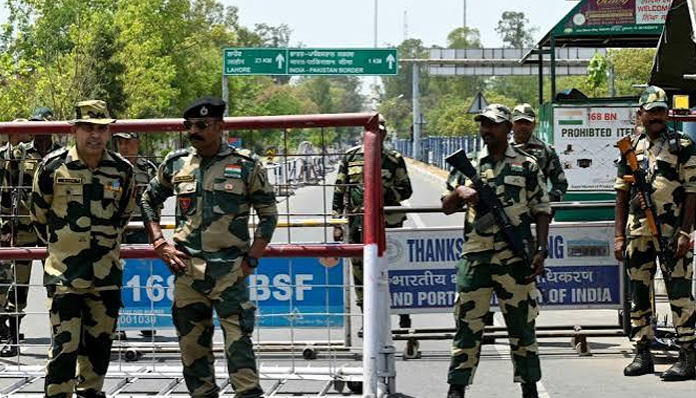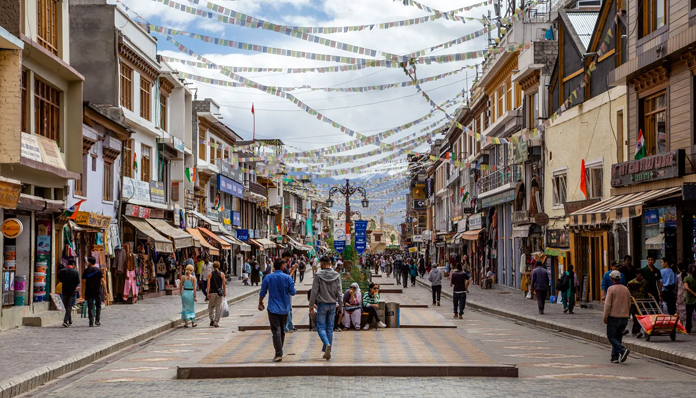
China has once again objected to India’s actions regarding Ladakh, stating that it does not recognize the Union Territory of Ladakh established by India in 2019.
During a press briefing in Beijing on Tuesday, Chinese Foreign Ministry spokesperson Mao Ning also criticized India’s recent decision to formally assign names to 28 locations and geographical features in Ladakh.
Mao Ning made this statement in response to a question regarding the Indian Ministry of Home Affairs’ move to include these locations in official maps. China claims that some of these areas are disputed or under effective Chinese control.
The Chinese spokesperson described India’s move as “illegal and unacceptable,” asserting that it does not alter the reality on the ground. According to her, the areas in question—located in the western sector of the China-India border—have always been part of China.
The locations officially named by the Indian Ministry of Home Affairs on October 2 include the Gogra and Hot Springs areas. Both sites were key focal points of the border tensions and military clashes between India and China in 2020.
Situated near the Line of Actual Control (LAC), these areas hold significant strategic importance regarding Indian Army patrols and military activities. According to the news agency PTI, the list of locations includes several geographical sites such as Chap Chingal Pass, Kanishka Peak, Parpik Glacier, Karun Pir Mountain, Alisha Giri, Shikmirik Pass, Shakurga Valley, Zorawar Peak, and Dara Karpo.
Rejecting China’s stance, India stated, “No matter how much China denies it, the undeniable fact remains that Ladakh is an integral and inalienable part of India.”
Randhir Jaiswal, spokesperson for the Indian Ministry of External Affairs, said that the 28 locations in Ladakh identified by the Ministry of Home Affairs have been incorporated into the official maps of the Survey of India with standardized names.
According to him, this process was completed following consultations with the Ladakh administration and local stakeholders, with the aim of facilitating accurate identification of the locations and raising public awareness.
India began the practice of formally naming locations in Arunachal Pradesh and Ladakh after China assigned Chinese names to mountains, rivers, towns, and other geographical features in Arunachal Pradesh.
China refers to Arunachal Pradesh as “South Tibet” or “Zangnan,” whereas India considers it an integral part of its territory.
On August 5, 2019, India revoked the special constitutional status of Jammu and Kashmir by abrogating Article 370 of the Constitution. Subsequently, the former state was bifurcated into two Union Territories: Jammu & Kashmir and Ladakh. China had raised strong objections at the very time Ladakh was designated as a separate Union Territory.
On August 6, 2019, Chinese Foreign Ministry spokesperson Hua Chunying stated, “China has consistently opposed the inclusion of Chinese territory into India’s administrative jurisdiction in the western sector of the China-India border.”
She added, “India has undermined China’s territorial sovereignty by unilaterally altering its domestic laws. Such a move is unacceptable and cannot be implemented.”
Tensions between India and China escalated significantly in various border areas of Ladakh in May 2020. On June 15, 2020, a bloody clash in the Galwan Valley resulted in the deaths of 20 Indian and four Chinese soldiers.
Relations between the two countries remained severely strained following this incident, even though 25 rounds of high-level talks have been held to normalize the situation. Despite this, the long-standing border dispute between the two nations remains unresolved.
Shen Shiwei, a senior Chinese journalist, wrote on the social media platform X: “Why does China’s Foreign Ministry state that it does not recognize the unilaterally and illegally established ‘Union Territory of Ladakh’? Because India has unilaterally and illegally incorporated Chinese territory into its map.”
However, India has consistently rejected this stance and maintains that Ladakh is an integral part of its sovereign territory.
Share this content: