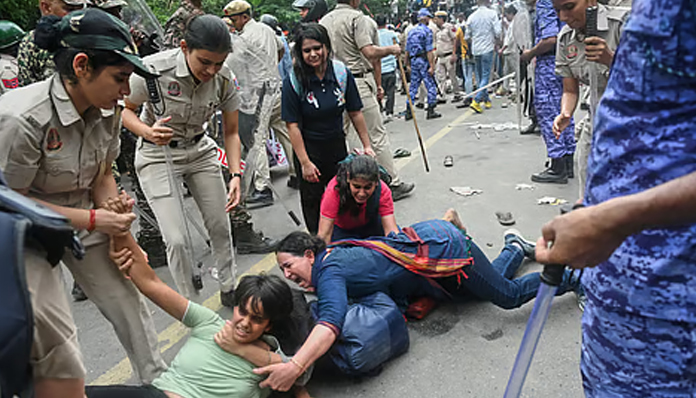
New Delhi: The Indian capital has been turned into a security fortress amidst ongoing protests—called by the “Cockroach Janata Party” (CJP) and various student organizations—demanding the resignation of Chief Election Commissioner Gyanesh Kumar and protesting alleged irregularities in electoral rolls. Amidst a highly tense law-and-order situation in the capital, police and law enforcement agencies have launched a massive crackdown, detaining thousands of protesters.
As part of government measures to curb the demonstrations, police have detained over 7,000 individuals, including CJP leaders such as Abhijit Dipke. Despite key leaders being detained directly from airports and their residences, activists and members of the public defied restrictions and continued to advance toward the protest sites.
To thwart the protests in the capital, the administration has established an extraordinary security cordon:
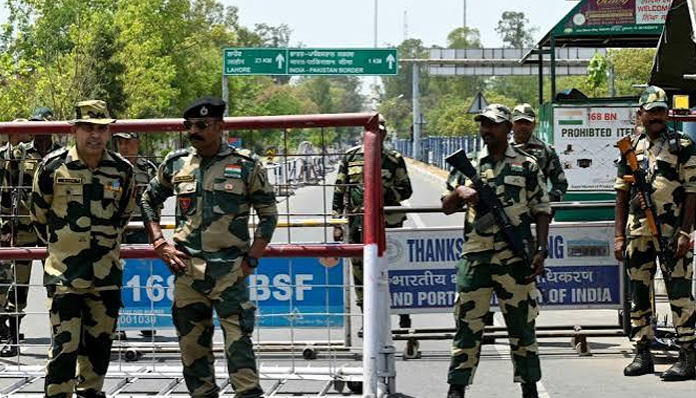
A total of approximately 35,000 security personnel have been deployed—including 23,000 paramilitary troops and around 5,000 Delhi Police personnel—to secure sensitive areas across the city and the vicinity of Jantar Mantar.
Heavy barricading has been implemented on the roads, and rigorous spot-checks are underway at the city’s key entry points. Strict restrictions on communication and movement have been imposed to prevent protesters from organizing and to limit the flow of information:
Mobile internet and data services have been suspended at more than eight locations and key areas, including Janpath, Kartavya Path, and several sensitive zones in Central Delhi.
Entry and exit points at over 50 Delhi Metro stations have been closed. Additionally, the schedules of certain trains arriving at central railway stations have been disrupted, and traffic movement on connecting routes is being subjected to rigorous checks.
Despite the heavy police presence, mass arrests, and internet shutdowns, protesters and students maintain that they will continue their peaceful demonstrations in support of their democratic rights and stated demands, while political and social circles are strongly condemning the crackdown.
Share this content: