By: Qudsia Aftab
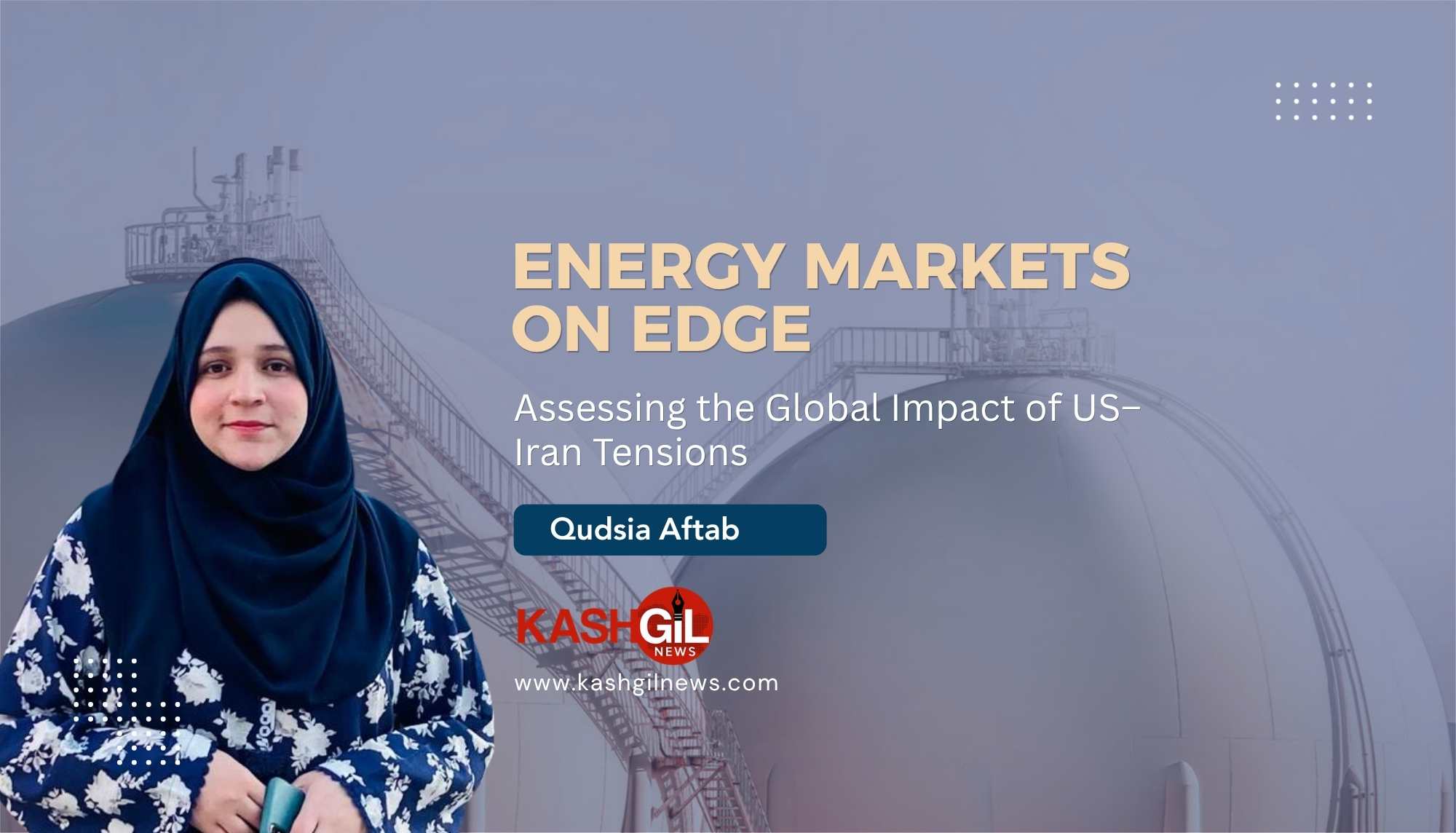
The Strait of Hormuz is a flashpoint and the implications for global energy are dire. The escalation of the US–Iran conflict in late February this year has triggered a crisis in the energy markets. At the center of this is the Strait of Hormuz, a narrow passage of water through which passes nearly 20% of the world’s oil — the supply line between the Gulf producers and the energy markets of Asia and Europe. Any threat to this area quickly becomes a supply and then price problem.
Since the crisis started, even partial restrictions and concerns for security have slowed the transport of oil and gas. Vessel routes have become uncertain, oil transport insurance has soared, and cargoes have been held up. The markets reacted swiftly: oil prices have topped $100 in a week, not just because of supply problems but also due to the uncertainty surrounding the duration of the unrest. In the energy market, perceptions can be as swift and strong as reality.
The short-term effects have been felt most sharply in Asia and Europe, which are heavily dependent on Gulf oil. In Asia, energy imports are vital to industrial and economic dynamics. For instance, in Pakistan, the recent increase in oil prices has added to inflationary pressures through rising transportation and electricity costs, further straining already vulnerable household incomes. The government has attempted to cushion the blow with oil subsidies and supply controls. However, the crisis’ uncertainty limits these effects. Ceasefires are formed and then broken; pipelines occasionally open and then close again. This uncertainty pushes policymakers into “crisis management” mode, sidelining medium- and long-term strategies.
The impact is not confined to oil. The Gulf states are key players in the export of liquefied natural gas, jet fuel, and industrial products like fertilizers. Impacts in these areas are already evident. Jet fuel prices have risen; fertilizer prices have surged — with global increases estimated at 30 to 50 percent in just a few weeks — triggering fears about food security. For states with significant agricultural populations, these price rises carry not only economic ramifications but also social implications. Even niche markets such as helium (in which Qatar plays a major role) have been affected.
These consequences highlight the fact that the effects of an energy crisis are not isolated. A crucial part of the diversification initiatives of Gulf nations like Qatar and the United Arab Emirates is tourism, which has also been impacted. Travel restrictions inside the region are a direct result of increased geopolitical tensions. For economies investing in becoming global hubs, even a small disturbance can have long-term effects on their reputations.
Long-term consequences can be more complex. The Strait of Hormuz issue could lead to a shift toward diversified energy imports in the global economy. While this is sometimes referred to as strategic realignment, it is neither immediate nor cost-free. This could mean persistent inflation for importers and volatile demand and revenue streams for exporters.
There is also an inherent paradox. In the short run, rising oil prices increase revenues for oil exporters. But in the long term, instability in the Gulf might prompt the world’s largest consumers to switch to alternative sources, potentially lowering long-term demand. Thus, the ongoing crisis is a danger to both consumers and producers. Ultimately, the tensions between the US and Iran serve as a reminder of the deep links between the Gulf and the world — a regional problem quickly becomes a global economic problem.
As the year unfolds, the message to Pakistan and other similarly situated economies is becoming increasingly evident: you cannot build a back-up plan in a crisis. It is now essential to have reserves, diversified energy plans, and a more robust economic strategy. Any disruption in the Strait of Hormuz will continue to impact markets, policy, and people worldwide until such structural shifts take place.
***
……………………………………………………………………………….
Qudsia Aftab is student of international Relation NUML Islababad Pakistan.
Share this content: