By: Khwaja Kabir Ahmed
History does not only look at what states did against their opponents, but also remembers how they treated ordinary citizens. The real test of a state is not only on the battlefield but when it faces the protests and dissent of its own citizens.
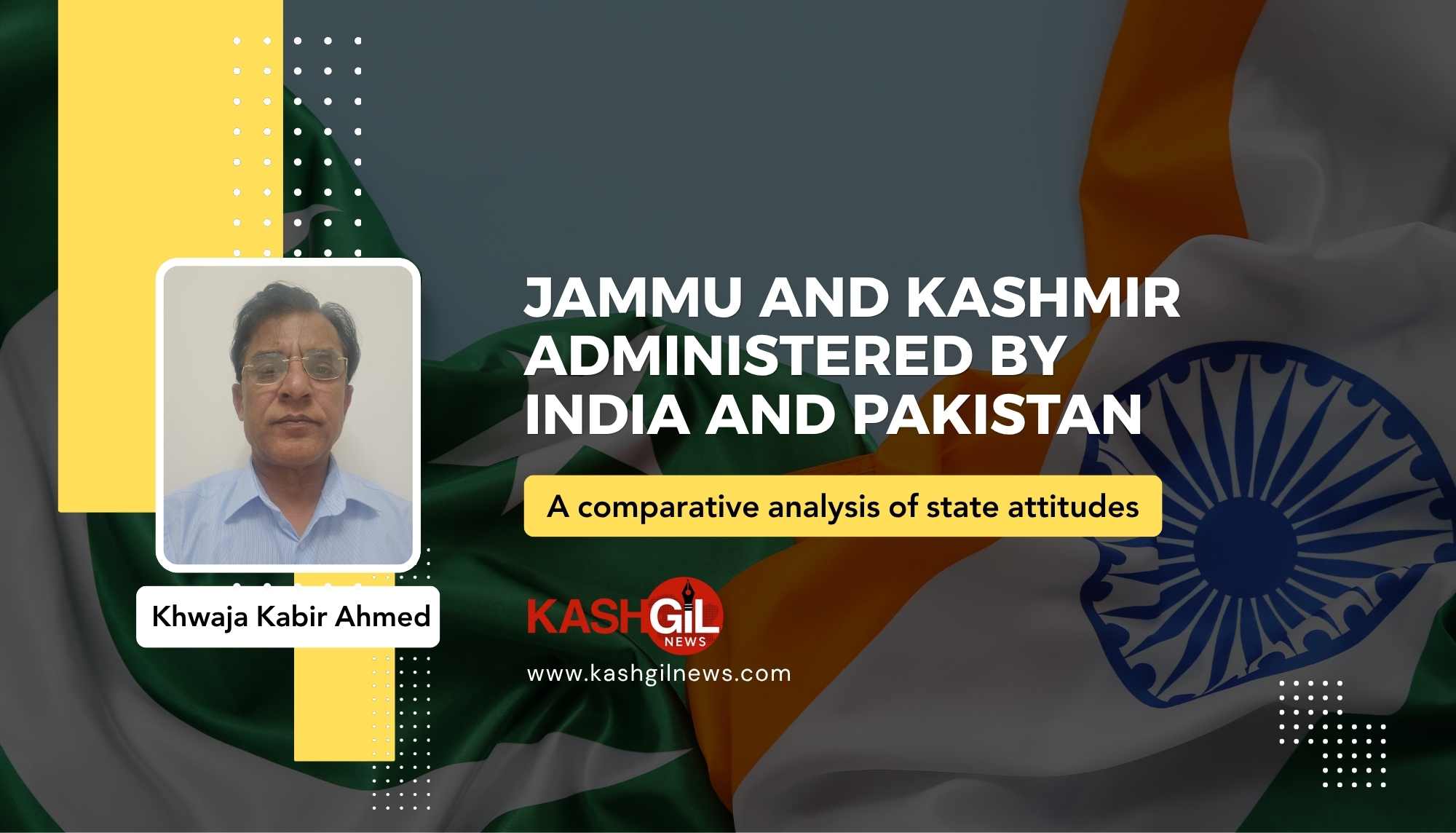
A civil rights movement has been going on in Pakistan-administered Jammu and Kashmir for the past three years. So far, it has been a completely peaceful, constitutional and fundamental economic and civil rights struggle. Its demands include points such as cheap electricity, fair prices for flour, local rights to resources and public welfare. That is, the movement, at least according to its declared objectives, is not for the seizure of power or armed conflict but for fundamental rights.
If, as is reported, the movement of basic necessities of life is virtually cut off, and the movement of food, water and medicine is also disrupted, and ordinary citizens, children, the elderly and the sick are affected, then this is not just a political issue but a fundamental human rights issue.
This situation can be compared to the Indian-administered Jammu and Kashmir, where the freedom movement has been going on for almost thirty-eight years in various forms, including armed struggle. During this period, there have been heavy military operations, long curfews, arrests, deaths and human rights violations, which is a bitter and bloody history.
But a question arises in the context of this history. According to the available information, there is no clear example of a complete and systematic stoppage of the supply of food, water and medicine to the people in the entire region at the state level.
If a state has been facing a freedom movement for almost thirty-eight years, but does not collectively target the provision of basic needs, while on the other hand, during a peaceful civil rights movement that has been going on for only three years, ordinary citizens’ access to food, water and medicine is affected, this comparison raises several fundamental questions.
The purpose of state power should be to protect citizens, not to deprive them of basic needs. It may be the right of the state to organize protests in accordance with the law, but if it results in patients being deprived of medicine, children of food and ordinary people of their daily necessities, then the issue has moved beyond politics and become an issue of human dignity and fundamental rights.
Remember, future generations will not ask how powerful the state was; they will see against whom and to what extent the force was used. They will also see whether the state treated its citizens as enemies and turned their basic needs into instruments of oppression, or respected the limits of humanity and law despite disagreements.
The situation in Pakistan-administered Jammu and Kashmir today must be seen in this context. The access of ordinary citizens to food, water and medicine is being affected, and its immediate restoration is the moral, legal and humanitarian responsibility of the state.
Dissent can be suppressed by force, but turning hunger, thirst and disease into political weapons cannot be a source of pride for any civilized society. States are not recognized by their strength, but by their attitude towards their citizens.
***
Share this content: