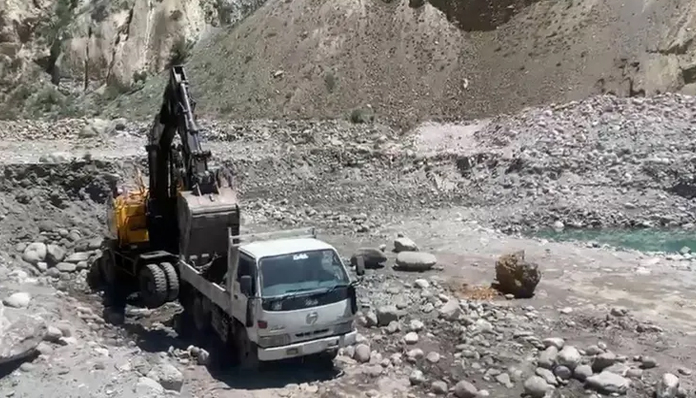
The indiscriminate use of heavy machinery to extract gold from the banks of the Indus River in the Pakistan-administered region of Gilgit-Baltistan has not only put the lands and livelihoods of the local population at serious risk, but has also raised serious concerns about the lifespan and performance of the region’s key infrastructure, bridges and national water projects like Diamer-Bhasha and Tarbela.
Residents of various areas including Hunza and Nagar districts are protesting against the ongoing mining with the help of heavy machinery on the river banks.
According to the local village council in the ‘Sheena’ area of Nasirabad tehsil of Hunza district, at least 40 kanals of arable land belonging to the residents have been washed away by the river so far.
The natural banks have been dug up and turned into deep pits using dumpers and hydraulic machines to extract gold, which is affecting the flow of the river.
Locals say that in the past, the ‘gold-seeking’ tribes used to extract gold by hand using only shovels and counting, which did not harm the environment, but now the pile of heavy machinery has started causing destruction.
According to official documents obtained by the BBC, the administrative and technical institutions of Gilgit-Baltistan have themselves expressed concern over this mining.
According to reports from the Department of Communications and Works and the local administration, mining is being carried out by Chinese and local companies very close to the Bunji Suspension Bridge, Bunji RCC Bridge and Thalachi Bridge (at a distance of 250 to 300 feet).
These bridges are extremely important for the movement of civilians, the Northern Light Infantry (NLI), trade routes and emergency services. Experts have warned that mining debris and erosion can severely damage the foundations of these bridges.
On April 30, 2026, WAPDA (Diamer Bhasha Dam Administration) wrote to the Gilgit-Baltistan Environmental Protection Agency (EPA) warning that excess soil and sand from ongoing mining between Basri and Raikot is flowing into the Tarbela and proposed Diamer Bhasha Dam reservoirs.
This excess soil is likely to reduce the water capacity of the reservoirs, affect power generating turbines and reduce the overall life of national water projects.
The EPA says that the region is already under the threat of melting glaciers, floods and landslides, and illegal and unbalanced mining has increased the risks of lake formation and catastrophic flooding in low-lying areas.
According to the Department of Minerals, 77 gold mining lease agreements (including 5 foreign companies) have been issued so far, while illegal mining is also ongoing.
Gilgit-Baltistan Environment Minister Raja Nasir reacted to the situation and said that the government is fully aware of these concerns and addressing them is a priority.
“We are creating a new mechanism and authority. In future, mining using heavy machinery will be allowed only in places where there is no threat to any human population, infrastructure or environment. Along with this, the ‘gold-mining’ tribes who extract gold by hand in the traditional way will also be encouraged.”
Share this content: