by: Habib Rehman
Esteemed colleagues of all political parties and organizations, including the Jammu Kashmir Action Committee, Greetings!
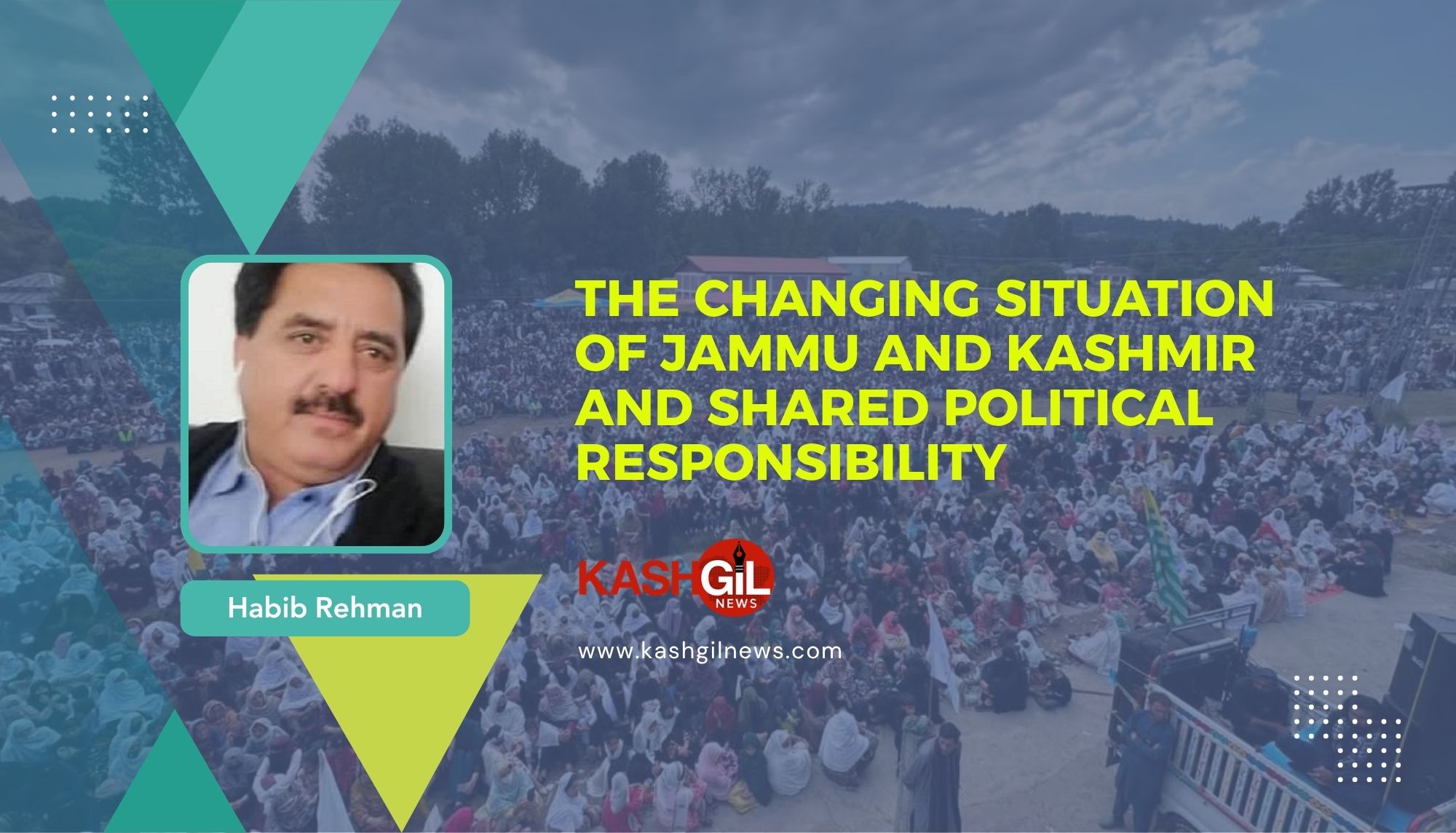
I am writing this today for your attention, because the rapid change in the situation in Pakistan-administered Jammu and Kashmir has not only created some new hopes, but also raised serious concerns about the future of the state.
Pakistan’s changing policies and current practices reinforce the fear that a policy of permanently integrating this part of the state into Pakistan by crushing public resistance through further coercion is being adopted. For this purpose, various narratives have been created, the political process has been restricted, and a government has been established through force that does not truly represent the aspirations, hopes, and political opinions of the people.
The attempts to suppress civil rights movements through various allegations and to intimidate political activists also seem to be part of this broader situation. As a result, the fundamental political question of the state of Jammu and Kashmir and the real voice of the people are being silenced.
I think we should see this situation not only in the local context but also in the context of major changes taking place in the region. Reports in the Indian and international media regarding the relations between India and China, border issues, provocations and recent diplomatic activities raise several important questions. In the context of all these changes, the fear cannot be ignored that efforts to change the current status of Jammu and Kashmir may intensify.
The developments in Gilgit-Baltistan are also an important example for us, especially since China’s interests are a major factor in this region.
In such a situation, I believe that the pressure will not be limited to nationalist, leftist and progressive forces. Those political and religious parties, which stand with the interests of Pakistan today, may also face a situation of limited political space in the future. If the current status of the state is abolished, its effects will affect all of us.
Therefore, I would like to appeal to all political parties, organizations, leaders and colleagues of the Jammu Kashmir Action Committee to move beyond our mutual differences, accusations, personal likes and dislikes and selfishness and move towards a broad political alliance.
An alliance that is organized from the local level to the global level and plays a role in protecting the future of the state, the rights of the people and their political voice through political and peaceful struggle.
In this environment full of dangers and concerns, it is not the time to weaken each other. The need of the hour is for us to understand the common threats, come closer to each other despite our differences and find a common political path.
This is not the time to align against each other, but for a joint political struggle to protect the future of the state of Jammu and Kashmir and the fundamental rights of the people.
٭٭٭
Share this content: