Rawalakot / Investigation Report / Muhammad Khurshid Baig
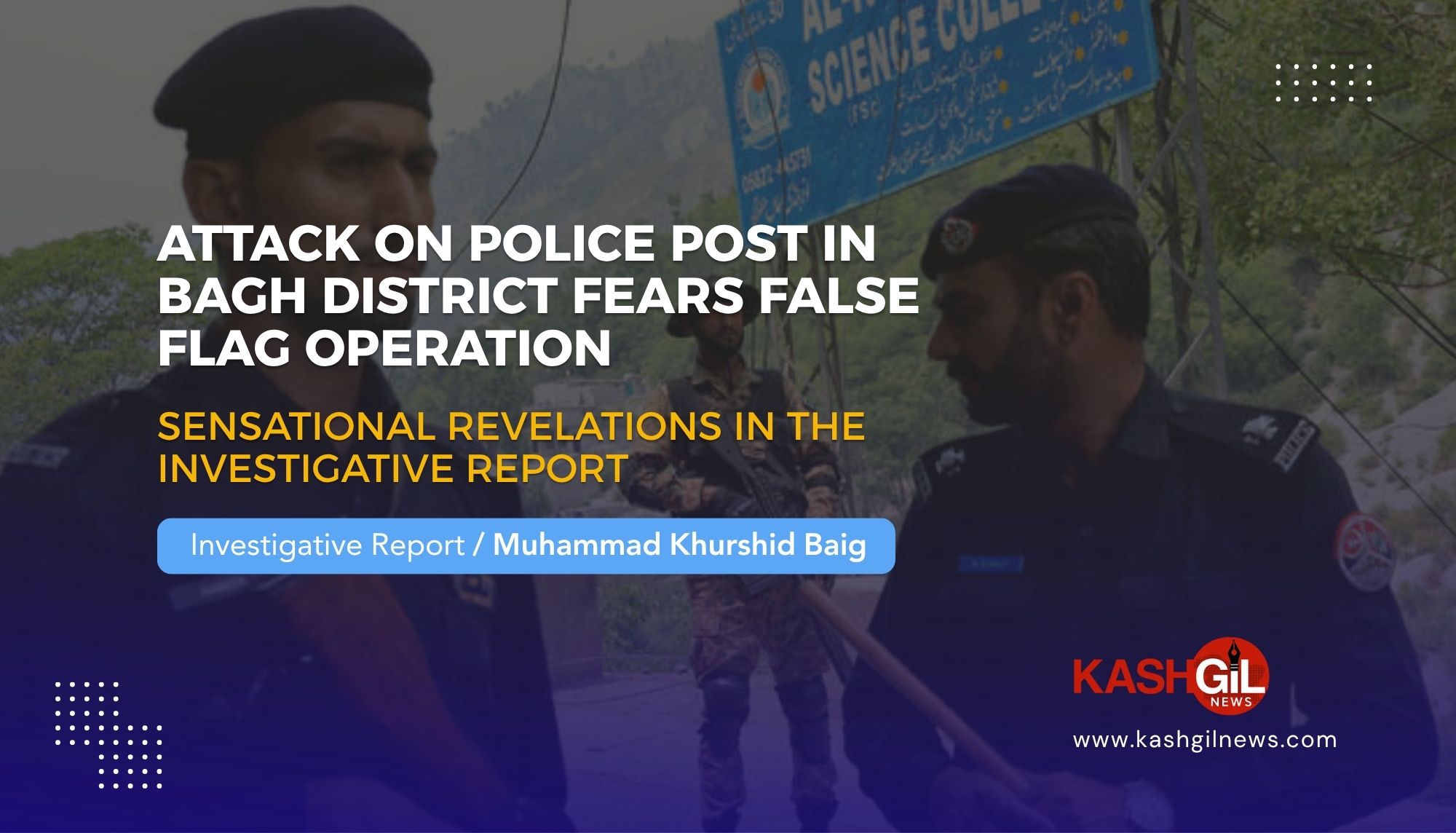
A mysterious armed incident that took place at a police post in Kopra, Union Council Chatra Topi, Bagh district of Pakistan-administered Jammu and Kashmir, has raised serious questions in the already tense political and security situation in the region. Two FC (Frontier Constabulary) personnel and an alleged attacker were killed in this incident, however, information coming out from internal police sources has cast serious doubts on the official narrative of calling the incident a mere external attack.
Basic facts and contradictions of the incident:
According to sources, the bodies of the two slain FC personnel have been immediately sent to Pakistan, while the body of the alleged attacker has been kept under tight security in the cold storage of the District Headquarters Hospital Bagh, where no access is being allowed to the common citizens or the media.
Police sources, speaking on condition of anonymity, made a sensational revelation that the alleged attacker who was killed was not a local Kashmiri but a non-state person, and the same pattern was adopted in this operation that is usually used in the insurgent areas of Balochistan and Waziristan.
Police sources’ revelations and key points:
Mysterious identity of the attacker: According to police officials, the identity, face, and background of the attacker are being hidden from the public. The failure to reveal the attacker’s real connections, route of arrival, and sources of weapons in any military incident has raised questions about the agency’s own narrative.
Armed elements in civilian clothes and modern weapons:
According to the investigative report, some police officials have claimed that the fear of ‘false flag’ or covert operations by sensitive agencies has increased during the recent public movements and protest wave. The presence of unrelated and plainclothes armed men in the area and the use of modern weapons that are beyond the reach of ordinary citizens reinforce this suspicion.
Attempt to defame popular movements:
Sources allege that sensitive agencies are introducing violent elements into the region to portray public protests and civilian movements for self-determination as violent, which has also left police and security personnel deployed at the grassroots level worried and uncertain.
Reservations and transfers of subordinate personnel:
According to sources, forces personnel deployed from outside are brought in on the pretext that they are fighting against dangerous militants, but seeing the ground realities, many personnel refrain from using deadly force on civilians. Those personnel who raise questions after knowing the truth are immediately transferred to unknown locations.
Incidents of Arja, Baloch Pilandri and Rawlakot:
According to the report, the recent unrest, looting and incidents in Arja and Baloch Pilandri in Rawlakot city have also raised concerns about the involvement of similar invisible and non-state elements, who had nothing to do with the ordinary protesting citizens.
Limited powers and helplessness of local administration:
The investigative report indicates that the powers of the local political government, bureaucracy and police administration established in Pakistan-administered Jammu and Kashmir are extremely limited. All important decisions of a sensitive and security nature are taken by the upper echelons of Rawalpindi and Islamabad, while local authorities are merely bound to implement these orders.
Basic questions raised for a transparent investigation:
After this bloody incident, the public and journalistic circles are demanding immediate answers to the following questions and an independent, transparent international and judicial investigation:
- What is the real identity of the alleged attacker, where did he live and how did he reach the sensitive area of Bagh?
- Where did the attacker get the modern military weapons and ammunition?
- Will an impartial forensic analysis of the bullet casings and other evidence found at the scene be conducted?
- Is the state ready to make the face and travel records of the alleged attacker public to verify its narrative?
This incident is not limited to just three deaths, but also reflects the growing distrust and backlash against state policies in the region. The truth, instead of hiding the truth or playing politics of accusations, is the fundamental right of the deceased and the people of the region.
Share this content: