Muzaffarabad / Kashgil News Special Report
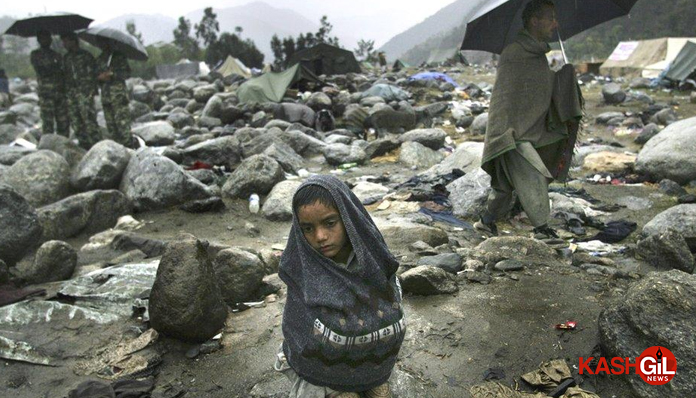
The devastating earthquake of October 8, 2005, ranks among the worst tragedies in the history of Pakistan-administered Kashmir; beyond claiming thousands of lives, it caused widespread destruction to homes, government buildings, roads, bridges, and educational institutions. Numerous school buildings collapsed, and a large number of students and teachers lost their lives, severely impacting the education sector.
Even though years have passed since the earthquake, critical questions remain regarding school reconstruction, construction standards, oversight, and future protection against natural disasters. While various national and international reports detail the damage sustained by children and educational institutions, discrepancies in figures across different sources necessitate reliance on authentic government records and primary sources for accurate data.
Awareness campaigns regarding the October 8 event are currently underway across various areas of Pakistan-administered Kashmir. Relevant bodies, including the State Disaster Management Authority (SDMA), have displayed awareness posters on roads, highways, and other locations, featuring the prominent message: “Safe Schools, Safe Generations.”
While this message regarding disaster preparedness is of immense importance, the context of the educational institutions destroyed in the 2005 earthquake raises several fundamental questions. According to available records and sources, a large number of schools sustained damage during the earthquake. This raises the question of whether earthquake-resistant construction principles were fully adhered to when these buildings were originally constructed. Was the quality of construction materials regularly inspected? Were earthquake-resistance requirements incorporated into the architectural plans and structural designs? Furthermore, was effective oversight provided by the relevant authorities during construction?
Another crucial question is whether comprehensive technical investigations were conducted to determine the reasons behind the collapse of school buildings following the 2005 earthquake. In instances where substandard materials, flawed designs, violations of building codes, or negligence in supervision were identified, was action taken against the responsible individuals, contractors, or relevant departments?
Following the earthquake, large-scale projects were launched to reconstruct and rehabilitate educational institutions in Pakistan-administered Kashmir. Various government and non-government bodies, international donors, and aid organizations played a role in this reconstruction effort. However, two decades later, it is essential to assess the current structural quality of the schools built during that period and determine whether these buildings are capable of withstanding a major future earthquake.
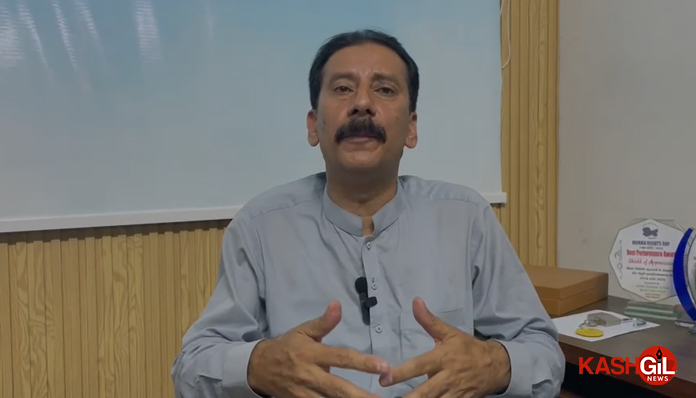
Experts emphasize that periodic technical inspections of school buildings are vital in any earthquake-prone region. In this context, it is also important to ask whether regular structural safety audits are being conducted for the existing school buildings in Pakistan-administered Kashmir. Are inspections conducted by experts to assess the structural integrity of foundations, pillars, beams, roofs, and other critical components? If structural weaknesses are identified in a building, what procedures are followed for repairs or the provision of an alternative facility?
Furthermore, practical preparedness for dealing with earthquakes or other emergencies in schools is a crucial matter. Are students and teachers regularly involved in emergency drills? Do schools have safe evacuation routes, designated emergency assembly points, and first-aid facilities? Have teachers been trained to safely evacuate children during emergencies?
According to experts, while earthquakes cannot be prevented, the loss of life can be significantly minimized through robust construction, improved planning, regular technical inspections of buildings, and public as well as institutional training.
The tragedy of October 8, 2005, serves as a reminder that rebuilding structures after a natural disaster is not enough; ensuring their durability, construction quality, and proper oversight—as well as protection against future risks—is equally essential.
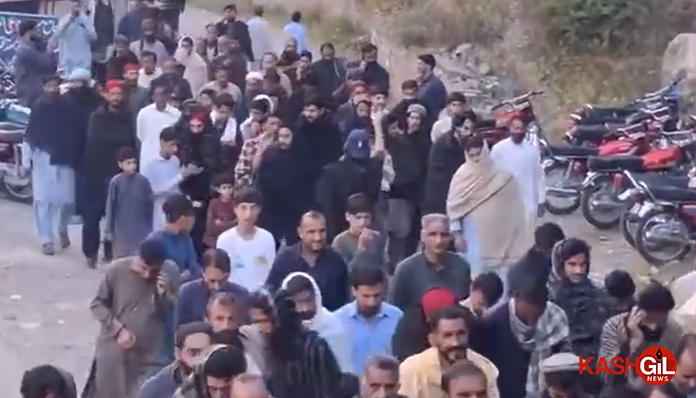
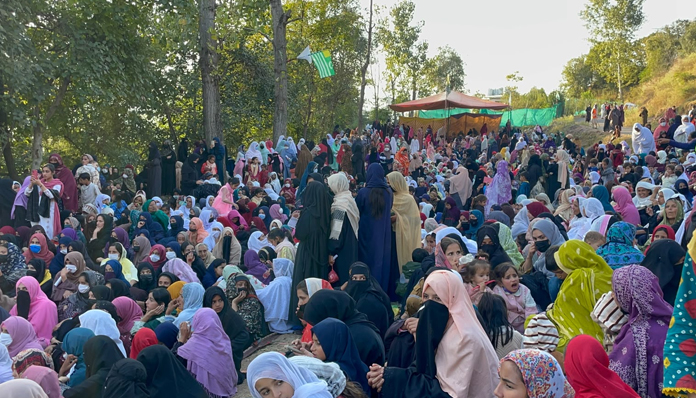
Public opinion suggests that instead of limiting the observance of October 8th merely to commemorative ceremonies, prayer gatherings, and awareness posters, the occasion should be used to conduct a formal review of past experiences. The government and relevant authorities must disclose information to the public regarding the reasons behind the destruction of schools in 2005, reconstruction standards, construction oversight, accountability, and the current safety status of educational institutions.
In particular, it is essential to clarify how many school buildings in Pakistan-administered Kashmir have been certified as fully earthquake-resistant, how many have undergone recent technical inspections, how many require repairs or structural reinforcement, and what systems are in place for practical emergency preparedness training within schools.
For families who lost their loved ones and children in the 2005 earthquake, this issue is not merely a matter of statistics but a reminder of a national tragedy. Therefore, the message “Safe Schools, Safe Generations” will only be truly effective if the safety, construction standards, and oversight of school buildings are practically ensured.
While natural disasters may be beyond our control, preventing substandard construction, negligence, and a lack of safety preparedness is our responsibility.
Ask questions for the sake of your children and their future.
***
Share this content: