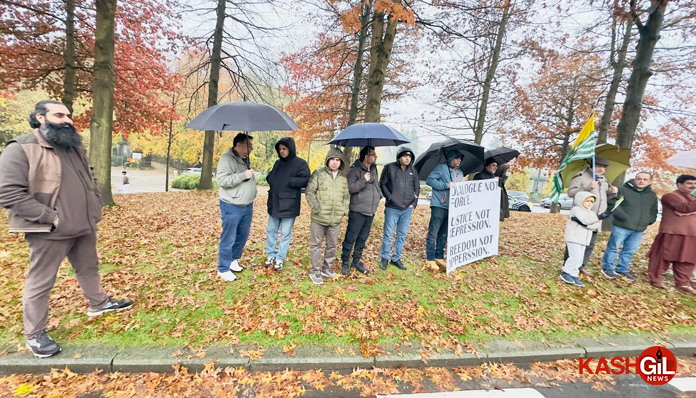
In Pakistan-administered Kashmir, a campaign of retaliatory actions and illegal arrests by Pakistani forces and the district administration has intensified, aimed at suppressing the movement for public rights and peaceful protests. Reports from Muzaffarabad, Sehnsa, Thamqam, and Rangla indicate that security forces have begun targeting students, religious figures, and ordinary citizens.
Students from the Abdul Ghani Medical Institute in Muzaffarabad held a peaceful rally in honor of their “martyrs” (those killed during the protests). Shortly thereafter, security forces conducted raids and arrested several students.
Public circles and student organizations have expressed deep concern over these developments, demanding that the government and district administration secure the immediate and unconditional release of the students.
Protesters assert that peaceful dissent and the expression of differing opinions are fundamental rights of every citizen, and that such oppressive measures are jeopardizing the educational future of the students.
In Sehnsa, security forces took action against a prominent figure, Allama Habib Sultan, arresting him last night and transferring him to an undisclosed location—reportedly for supporting the peaceful protests organized by the Public Action Committee.
According to reports from Thamqam, security forces have abducted the elder brother of Mujtaba Banday; the individual is a government employee working in the Forest Department. According to sources, the individual in question has no political involvement, nor any direct connection to the Public Action Committee; he is being targeted solely because he is the brother of Mujtaba Banday. He had previously been suspended from his job on two occasions.
The police have openly violated the agreement reached between the Rangla administration and the Public Rights Movement.
By launching an assault at the very threshold of Raja Tasneem Ashraf’s home—specifically while prayers (Fatiha) were being offered at the grave of his mother—the police violated the sanctity of the household (chadar-o-char-dewari). During this incident, those present were subjected to severe mistreatment, and their clothing was torn.
Public and political circles have strongly condemned these events, asserting that state oppression and unlawful tactics cannot shake the resolve of the public movement.
Share this content: