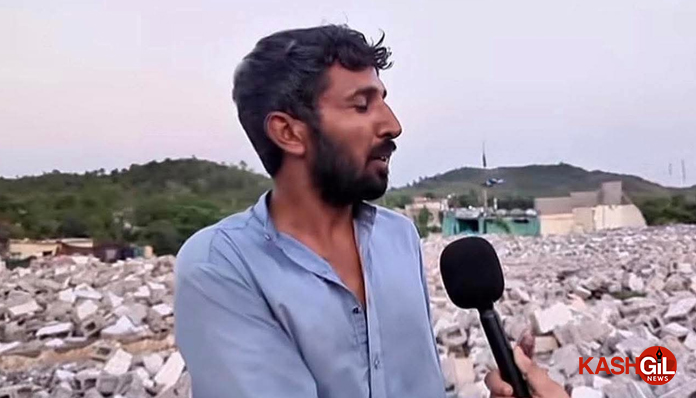
Several houses were demolished during the operation against the alleged illegal settlement in the outskirts of Pakistan’s capital Islamabad, over which the affected residents protested strongly and made serious allegations against the government institutions.
According to the victims, they had built their houses here by spending their entire life savings. Talking to the media, an affected citizen said that he had built a house here for about three million rupees by selling the village land, while payments were also made to the relevant authorities at various stages. He said that recently, twenty-five thousand rupees were allegedly paid for the construction of the wall of the house.
The affected citizen added that “We have been sitting on the rubble for two days with five children, our entire life’s earnings were destroyed in a few hours.” They claimed that electricity and gas meters were also installed in the same area with government permission, which raises the question of how basic amenities were provided if the settlement was illegal.
Locals say that not only recent settlers but also families who had been living in the area for decades were affected in this operation, even residents who lived in the area before the establishment of Islamabad were made homeless. The value of many houses is said to be in the millions of rupees.
Civic circles and social activists have also expressed concern over the situation and demanded that the victims be provided with alternative accommodation or appropriate compensation. They say that before declaring any settlement illegal, it is necessary to determine its establishment, provision of facilities and the responsibilities of the relevant institutions.
On the other hand, no detailed position has been taken by the authorities on the matter so far, however, according to legal experts, construction on state land without permission is considered illegal, but the rehabilitation of the victims on humanitarian grounds is also the responsibility of the government.
This incident is once again raising serious questions about the balance between urban planning, state policies, and public rights.
Share this content: