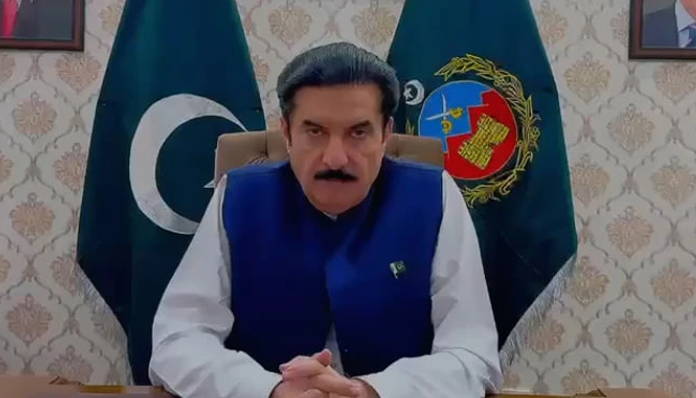
A state of emergency has been imposed in Pakistan’s Khyber Pakhtunkhwa province.
President Asif Zardari has approved the imposition of an emergency in Khyber Pakhtunkhwa under Article 232 of the Constitution of Pakistan, and implementation has begun immediately. Federal Interior Minister Mohsin Naqvi and Minister of State Talal Chaudhry had visited the Presidency with a summary from the cabinet; the emergency was enforced following the President’s approval.
Under Article 232 (Chapter 10) of the Constitution, the President of Pakistan is empowered to declare an emergency in the event of war, external aggression, or internal unrest and grave emergency situations that are beyond the control of the provincial government. According to the Constitution, upon the imposition of an emergency in a province, the federal government may directly assume administrative control or direct the Governor to take over all duties; however, the decision must be ratified by both houses of Parliament (the National Assembly and the Senate) within ten days.
Barrister Gohar, the leader of Pakistan Tehreek-e-Insaf (PTI), has categorically rejected and strongly condemned the imposition of the emergency in Khyber Pakhtunkhwa. He issued a stern warning, demanding that the federal government immediately withdraw the decision to impose the emergency, cautioning that failure to do so would lead to extremely serious consequences. Meanwhile, the Human Rights Commission of Pakistan (HRCP) has expressed deep concern over this move, warning that the federal government’s imposition of an emergency in Khyber Pakhtunkhwa would escalate political tension in the country to a dangerous level and deal a severe blow to the already fragile democratic process. The HRCP has urged the federal government and the Pakistan Tehreek-e-Insaf to immediately initiate meaningful political dialogue and ensure that the fundamental constitutional rights of citizens are not suspended under any pretext.
Share this content: