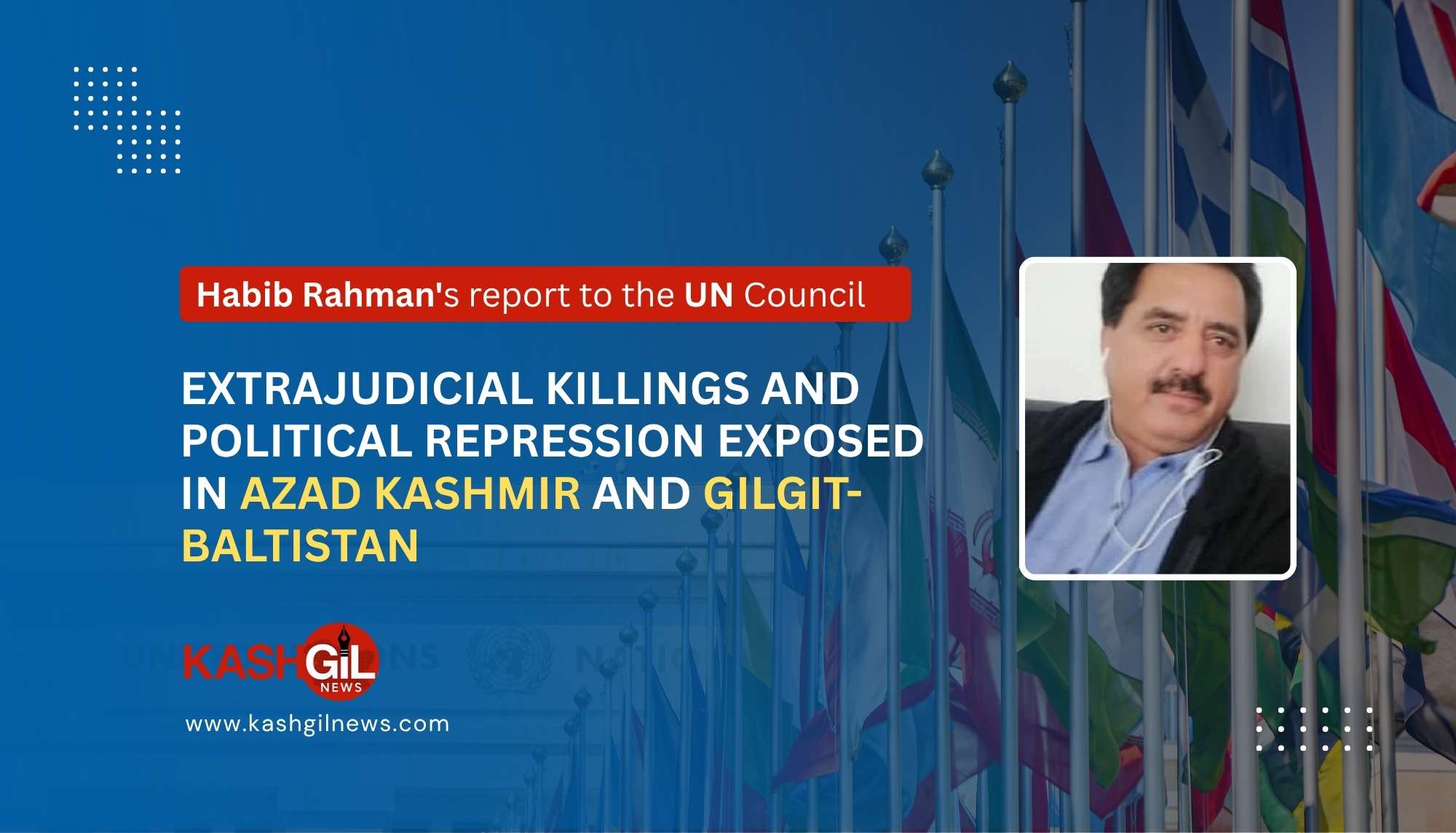
Former spokesperson of the Jammu Kashmir People’s National Party Habib Rehman has submitted a detailed report to the 61st session of the United Nations Human Rights Council (UNHRC) expressing grave concern over systematic violations of the right to life, political repression and illegal exploitation of resources in Pakistan-administered Jammu and Kashmir (Azad Kashmir) and Gilgit-Baltistan.
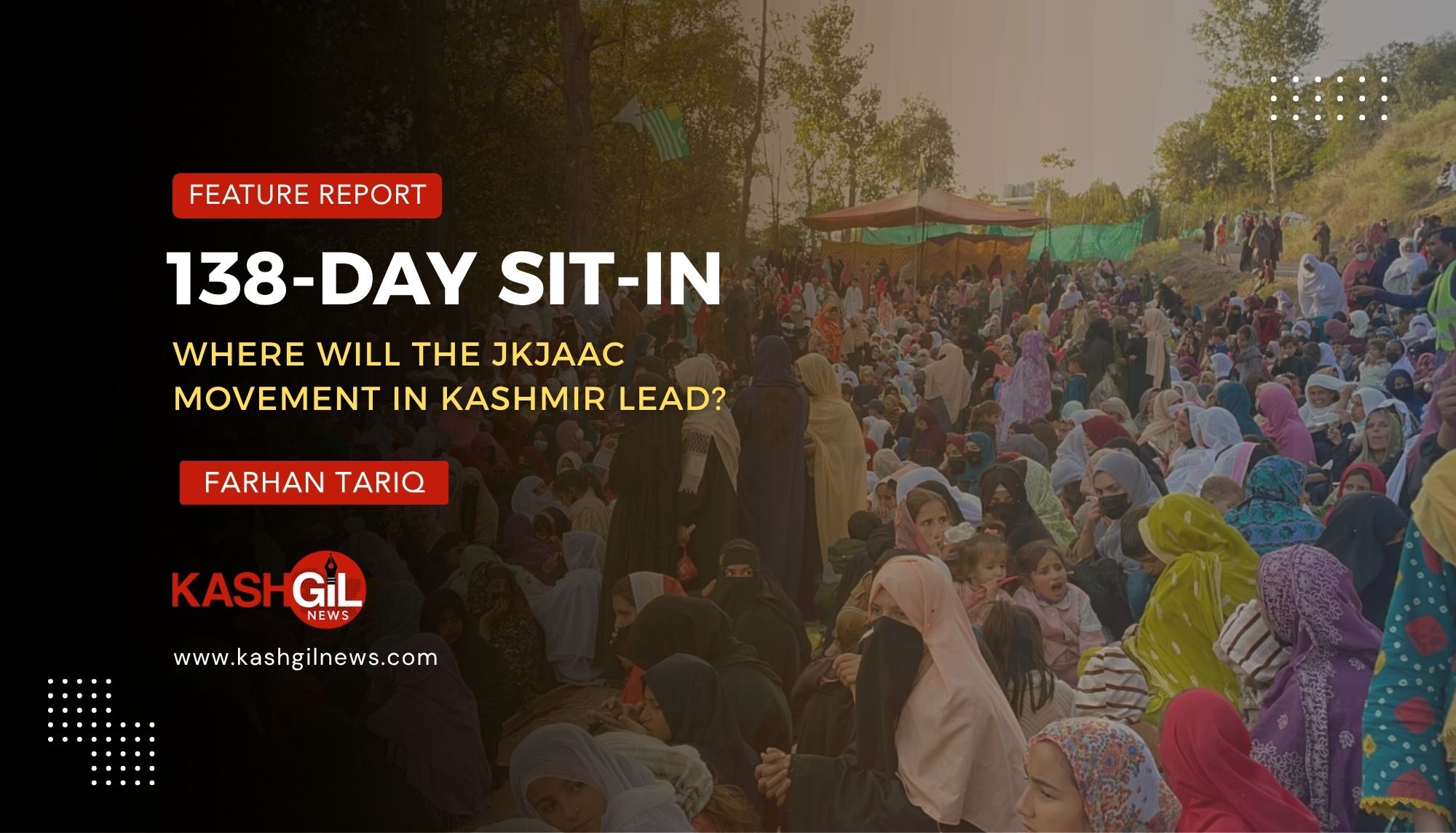
According to the report, the civil rights movement, which has been ongoing since late 2024 and is being led by the Joint People’s Action Committee (JKJAAC), has faced deadly force, direct fire and extrajudicial killings by Pakistani security forces.
THE DHIRKOT MASSACRE AND LETHAL SUPPRESSION OF PEACEFUL PROTEST
1.1 Use of Lethal Force Against Peaceful Demonstrators
We respectfully bring to the urgent attention of the Human Rights Council the rapidly deteriorating human rights situation in Pakistan occupied Jammu Kashmir (AJK). Since late 2024, a predominantly peaceful civil rights movement—led by the Joint Awami Action Committee (JKJAAC), alongside pro freedom forces and community-based organizations—has been met with excessive, unlawful, and lethal force by Pakistani authorities.
Despite demonstrators’ consistent adherence to non-violent principles, security forces, including Pakistan Police units and paramilitary Rangers, have repeatedly used live ammunition against unarmed civilian gatherings. Available evidence indicates the implementation of a de facto “shoot-to-kill” policy, in direct violation of the UN Basic Principles on the Use of Force and Firearms by Law Enforcement Officials, which require necessity, proportionality, and accountability.
1.2 Killings in Dheerkot, Bagh District
During protests in late 2025, the situation escalated gravely in the Dheerkot area of Bagh District, resulting in serious violations of the right to life:
Mass Casualties: At least thirteen (13) peaceful protesters were killed by live ammunition fired by security forces. Medical reports and eyewitness testimonies indicate that many victims sustained gunshot wounds to the head and upper torso, strongly suggesting intent to kill rather than to disperse or control crowds.
Extrajudicial Killings: Credible testimonies indicate that several individuals were deliberately targeted during peaceful assemblies. These killings bear the characteristics of extrajudicial executions, seemingly intended to intimidate the population and dismantle the civil rights movement.
The Case of Raja Zarnosh and Raja Jabran: We draw particular attention to the targeted killing of two brothers, Raja Zarnosh and Raja Jabran. Eyewitness accounts and family testimonies indicate that they were falsely labeled as “terrorists” and deliberately targeted by security forces. Both individuals were educated professionals in the information technology sector. We allege that their killings constituted extrajudicial executions aimed at suppressing youth-led demands for political dignity, identity, and statehood.
Government Rejection of a Judicial Commission: Despite widespread national and international concern, the Government of Pakistan has rejected demands for the establishment of an independent judicial commission to investigate the killings of Raja Zarnosh and Raja Jabran. Appeals from victims’ families, civil society organizations, legal professionals, and political representatives were dismissed without transparent justification or the announcement of any credible alternative investigative mechanism.
This refusal constitutes a denial of the right to an effective remedy and reinforces concerns of institutionalized impunity. The failure to initiate an independent, impartial, and effective investigation violates Pakistan’s obligations under Articles 2(3) and 6 of the International Covenant on Civil and Political Rights (ICCPR), as well as international standards under the UN Minnesota Protocol on the Investigation of Potentially Unlawful Death.
Jurisdictional Overreach: The deployment of Pakistani security forces beyond their lawful administrative jurisdiction coincided with the most severe violence. Serious concerns arise regarding the legal basis for authorizing Pakistani forces to operate in AJK and to use military-grade firearms against civilian demonstrators.
1.3 Communications Blackouts
Concurrently with the use of lethal force, authorities imposed widespread internet and mobile network shutdowns across state of AJK. According to documentation by Amnesty International, these blackouts were deliberately implemented to obstruct real-time reporting, conceal the scale of casualties, restrict freedom of expression, and prevent victims and their families from accessing international human rights mechanisms.
POLITICAL REPRESSION AND SYSTEMATIC PERSECUTION
2.1 Criminalization of Political Dissent
The Government of Pakistan has engaged in a sustained campaign to suppress political dissent in AJK and Gilgit-Baltistan. Secular nationalist leaders, civil rights activists, trade unionists, and community organizers advocating for political representation, economic justice, and protection of indigenous resources have been subjected to intimidation, arbitrary arrest, and politically motivated prosecution.
Peaceful political expression is increasingly framed as a security threat, eroding democratic participation and shrinking civic space across the region.
2.2 Persecution of Secular and Pro independent Political Actors
The Human Rights Council is urged to note the persistent and systematic persecution of secular, nationalist, and civil-rights-oriented political actors in Pakistan-Occupied Jammu Kashmir and Gilgit-Baltistan.
Individuals engaged in peaceful political activity—including public assemblies, human rights documentation, and cooperation with international human rights mechanisms—have faced arbitrary detention, intrusive surveillance, intimidation, movement restrictions, and threats. These practices violate Articles 9, 12, 19, 21, and 22 of the ICCPR, to which Pakistan is a State Party.
In AJK, approximately 300 activists have been placed on Pakistan’s Exit Control List (ECL), effectively imposing a travel ban that restricts their freedom of movement and prevents them from leaving the country for work, education, medical treatment, or family reasons. In Gilgit-Baltistan, activists are similarly subjected to severe movement restrictions through Schedule IV of Pakistan’s Anti-Terrorism Act.
A notable victim of these measures is Shabir Mayar, who has been severely restricted in his movements under Schedule IV. These measures are used as instruments of intimidation and punishment against peaceful dissent, undermining civic space and the right to free movement protected under Article 12 of the ICCPR.
Such actions have fostered a pervasive climate of fear, severely restricted political pluralism and undermining the right of affected populations to participate in public affairs, as protected under Article 25 of the ICCPR.
2.3 Abuse of Counter-Terrorism Laws
Hundreds of activists associated with the civil rights movement remain arbitrarily detained or placed under “Schedule IV” of Pakistan’s Anti-Terrorism Act. This designation imposes severe restrictions on freedom of movement, mandates repeated police reporting, and enables the freezing of personal bank accounts without effective judicial oversight.
The application of counter-terrorism legislation against peaceful civil rights activists constitutes a serious violation of Pakistan’s obligations under the ICCPR and represents the misuse of national security frameworks to silence dissent rather than address legitimate security concerns.
RESOURCE EXPLOITATION AND INTERNATIONAL RESPONSIBILITY
3.1 Accelerated Resource Extraction and Resource Colonialism
While local populations face repression and political exclusion, central authorities have accelerated large-scale extraction of minerals and natural resources in AJK and Gilgit-Baltistan. These projects are proceeding without free, prior, and informed consent of local communities and without adequate environmental or social impact assessments.
This pattern reflects a form of resource colonialism, whereby indigenous populations are dispossessed of their land and wealth while being denied political representation, economic participation, and fundamental civil liberties.
CALLS FOR ACTION
We respectfully urge the United Nations Human Rights Council to:
Initiate an independent and impartial investigation into the killings of Raja Zarnosh and Raja Jabran, including allegations of extrajudicial executions and the Government’s refusal to establish a judicial commission.
Hold the Government of Pakistan accountable for the unlawful killings of innocent civilians, and ensure that those responsible are brought to justice through transparent and effective legal proceedings.
Demand the immediate withdrawal of all First Information Reports (FIRs) registered against individuals for peaceful political activity, and call for an end to the misuse of the Anti-Terrorism Act against civil society.
Urge Pakistan to lift all travel bans and movement restrictions imposed on activists, including the placement of approximately 300 activists from AJK on the Exit Control List (ECL) and the enforcement of Schedule IV restrictions in Gilgit-Baltistan, including the case of Shabir Mayar.
Require full accountability and transparency in all resource extraction projects in AJK and Gilgit-Baltistan, ensuring compliance with international human rights and environmental standards, including the principles of free, prior, and informed consent of affected communities.
Share this content: