There is currently a wave of concern in political and social circles in Pakistan-administered Gilgit-Baltistan, where the arrest and prolonged detention of several Awami Action Committee (AAC) workers has raised serious questions about human rights.
Seven AAC members have reportedly been detained for over 45 days under anti-terrorism laws.
They are accused of making allegedly “anti-state” speeches and planning protests during an iftar dinner on March 8.
However, human rights groups maintain that the activities in question fall within the category of peaceful assembly and expression, which are guaranteed under international human rights law.
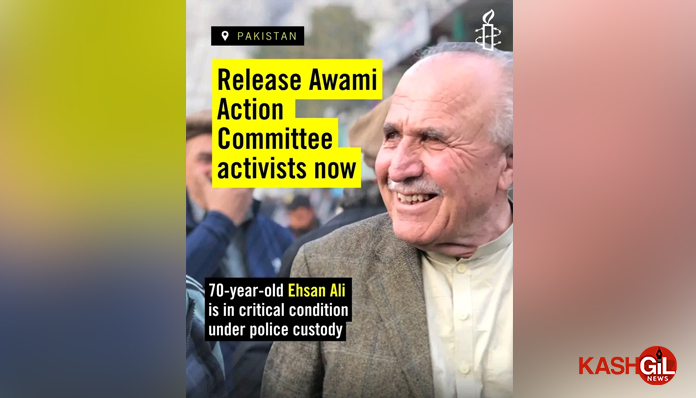
The detainees include 70-year-old senior lawyer and AAC chairperson Ehsan Ali, whose health is under serious concern.
According to the lawyers, Ehsan Ali was not provided with proper medical facilities during his detention, and was shifted to the hospital when his condition deteriorated to critical. He was shifted to the District Headquarters Hospital Gilgit after developing pneumonia and unconsciousness, where he is under observation along with other activists Abrar Bahuro and Hasnain Ramal.
The legal team says that the current medical facilities are inadequate for him due to his heart condition.
On the other hand, other activists named in the case have gone underground due to fear of arrest or have distanced themselves from political activities.
According to analysts, the situation is also affecting the campaign for the Gilgit-Baltistan elections expected on June 7, 2026, raising questions about the transparency of the political process.
Responding to the issue, the international human rights organization Amnesty International has demanded that the Pakistani authorities immediately release all arrested activists and drop the charges against them.
The organization says that if the release is delayed, at least the prisoners should be provided with immediate and adequate medical care.
The case is once again giving rise to the debate on how to maintain a balance between state security and civil liberties.
According to experts, if even peaceful political activities are suppressed under strict laws, it can prove detrimental to the democratic process and fundamental rights.
Share this content: