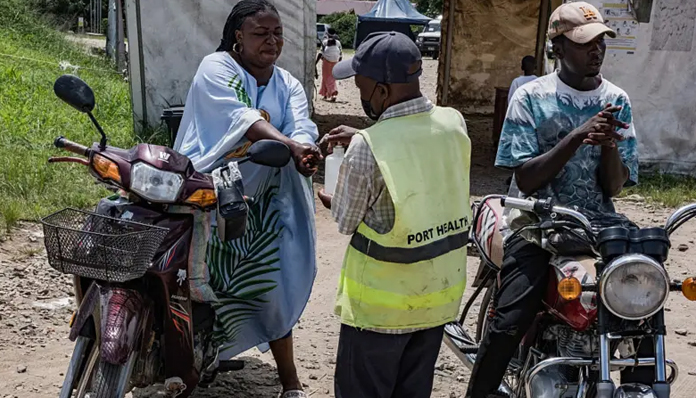
At least 131 people have died from the spread of the Ebola virus in the African country of the Republic of Congo, while more than 513 suspected cases have been reported.
Health officials in the Democratic Republic of Congo in Africa told the media that since there are no approved drugs or vaccines available to prevent Ebola, people should follow public health measures.
These measures also include precautions during the burial of Ebola victims.
According to the US Centers for Disease Control and Prevention (CDC), two confirmed cases of Ebola and one death have also been reported in Uganda.
The current outbreak of Ebola is caused by the Bundibugyo virus, which the World Health Organization has also declared an international emergency.
An American doctor in the Democratic Republic of Congo is among those confirmed to have contracted the disease, the medical missionary group he was working with and the CDC said. He will now be flown to Germany for treatment.
At least six Americans have been reported to have been exposed to the Ebola virus in the Democratic Republic of Congo during the outbreak.
The CDC said it was “assisting the safe evacuation of these directly affected Americans,” but did not confirm how many people were involved.
The United States has also issued a level four travel advisory for the Democratic Republic of Congo, its most severe, warning against travel.
The World Health Organization has declared the Ebola outbreak in the Democratic Republic of Congo a public health emergency of international concern.
However, the World Health Organization’s declaration of a public health emergency of international concern does not mean that we are in the early stages of a COVID-19 pandemic.
The outbreak is difficult to control because it involves a rare strain for which there is no vaccine and cases have emerged in areas affected by conflict.
Remember, Ebola is a rare but deadly disease caused by a virus.
Ebola viruses usually infect animals, especially fruit bats, but outbreaks in humans can begin when people eat or handle infected animals.
According to experts, symptoms take two to 21 days to appear. They appear suddenly and start like the flu, including fever, headache and fatigue.
As the disease progresses, vomiting and diarrhea begin and it can lead to organ failure, which can also cause internal or external bleeding in some patients.
The virus spreads from person to person through infected bodily fluids, such as blood or vomit.
Share this content: