The 21-hour talks between Iran and the United States in the Pakistani capital Islamabad have ended without an agreement, after which delegations from both countries left for their respective capitals. After the failure of the talks, both sides have accused each other of imposing tough conditions and showing no flexibility.
Iranian Foreign Ministry spokesman Esmail Baqai said that the talks began in an “atmosphere of mistrust” and that the expectation of a comprehensive agreement in a single session was unrealistic.
According to him, there was agreement on several points, but disagreements persisted on “two or three important points,” due to which an agreement could not be reached.
Baqai said that new issues such as the Strait of Hormuz were also included in the talks, which have their own complications.
He said that consultations with Iran, Pakistan and other friendly countries in the region will continue because “diplomacy never ends.”
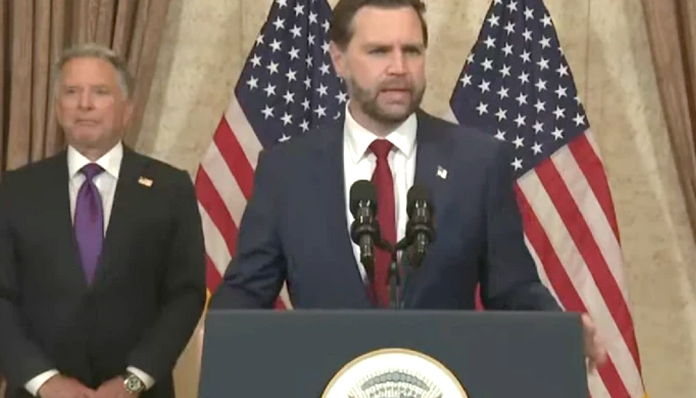
US Vice President JD Vance said during a press conference in Islamabad that the US showed “considerable flexibility” in the talks, but Iran refused to accept the basic conditions.
According to him, the main condition of the US was that Iran give clear and verifiable assurances that it will neither build nuclear weapons nor acquire the equipment needed for a nuclear capability.
JD Vance said that Iran’s current enrichment capacity has already been destroyed, “But do we see a willingness in Iran that they will never build nuclear weapons? We have not seen this willingness.”
He said that during the talks, Iran’s frozen assets were also discussed, but no progress could be made on this point either.
According to Iranian media, the Iranian delegation arrived in Pakistan on the night of April 10 and met with the army chief and the prime minister before the talks. The talks began at 1 pm on April 11, which continued for more than 21 hours.
Iranian news agencies claimed that Iran had made several proposals, but “unreasonable demands from the American side” prevented any common framework from being reached.
The US vice president also thanked Pakistani Prime Minister Shahbaz Sharif and Army Chief Asim Munir and said that Pakistan played an important role in facilitating the talks.
The US vice president did not clarify how the failure of the talks would affect the two-week temporary ceasefire. It is also not yet known when, where and under what procedure the next round of talks will take place.
Iran maintains that the US made “unreasonable demands” and showed no flexibility.
The US maintains that Iran did not accept the basic conditions, while the US demonstrated “good faith” and “flexibility”.
It is currently unclear whether the parties will return to the negotiating table or whether the ongoing tensions in the region will enter a new phase.
Share this content: